CASE STUDY
It’s Ok to Get Off the Highway, Too: An Interview with Wu Yao-Tung
Hui-Chen Huang
2026.05.13


A round belly over a loose t-shirt paired with a plaid shirt has been Wu Yao-Tung’s go-to look for years. His peers endearingly call him “Ah-Tung,” and those younger than him respectfully address him as “Older Brother Tung.” With salt-and-pepper hair and beard, Wu looks like a typical uncle next door who’s nonchalant about his looks, but this ordinary-looking middle-aged man is a legend in Taiwan’s documentary film circle. Swimming on the Highway is arguably Wu’s most well-known work, which he made when he was 26. Some have hailed it as an iconic masterpiece, and others see it as a work that challenged documentary filmmaking ethics and morality. It is still often discussed as a case study in academic settings.
Despite mixed reviews, Swimming on the Highway is one of the must-see Taiwanese documentaries. When the film came out, it brought Wu awards and fame, but at the same time, it also felt like a shackle that trapped him in an eternal dilemma of being a documentary filmmaker. Like these famous words by Wu, which were repeatedly mentioned by him in earlier interviews, “Documentary filmmaking is about taking something away from someone else’s life and turning it into your own accomplishment; it is a curse.” Those words seem to have become a prediction of his self-actualization.
After his incredible breakout hit, Wu made several other films, but they didn’t garner wide attention. People continued to remember him as that guy driving at night on a highway, cursing the endless darkness. It wasn’t until 2018 that Wu, then 46 years old, made another controversial, polarizing film, Goodnight & Goodbye. The film opens with him driving on a visually overexposed road, making the viewers wonder if he still hasn’t found the exit and cannot get off that haunted highway after all these years.
It is hard to talk about Wu without mentioning those two films, but there are already many critiques and articles available online about them; therefore, I won’t go into those two films in much detail here. Also, I would like to break away from those reviews and try to find another way of getting to know Wu, opting for a path that differs from the known highway.
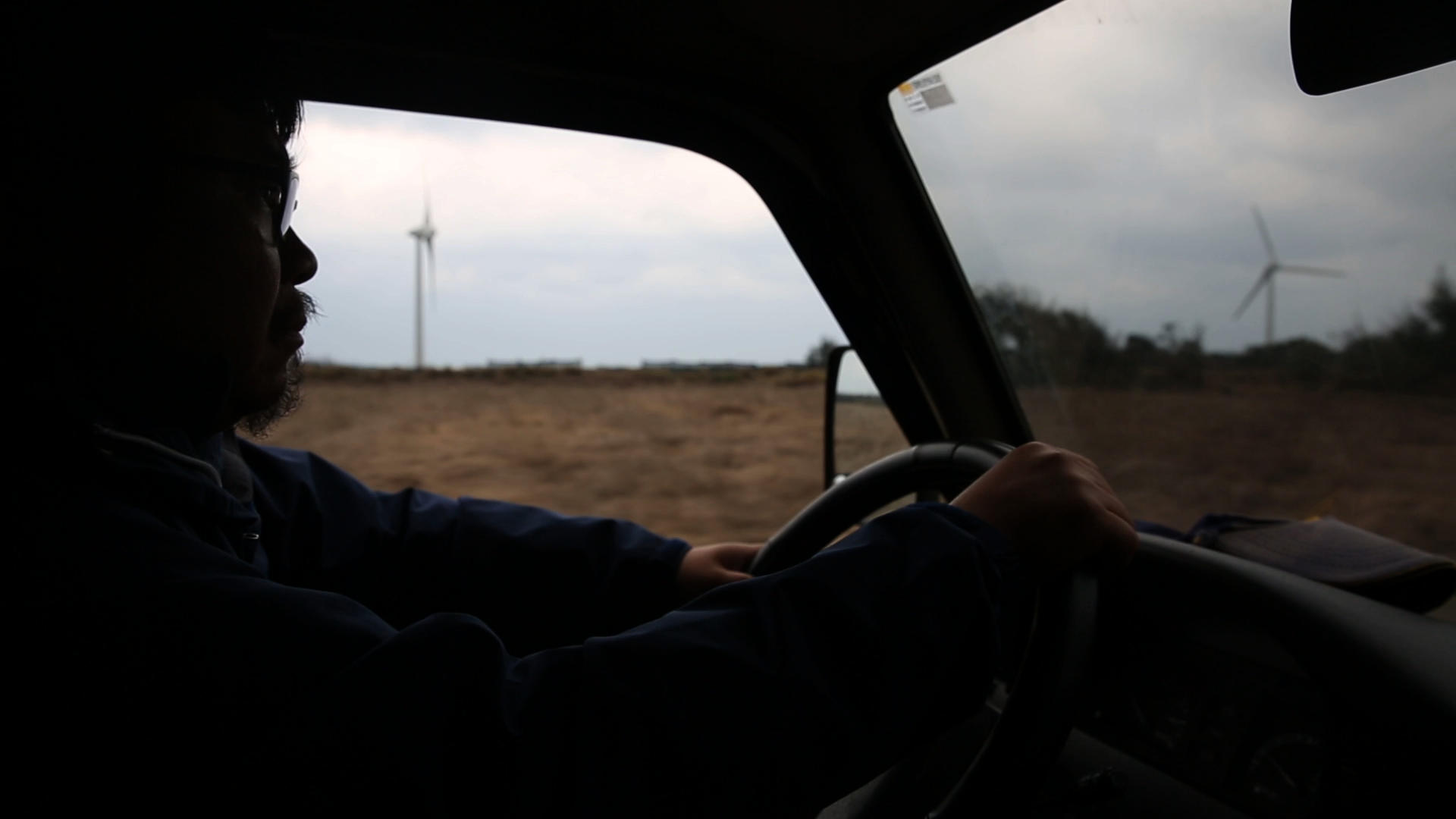
Film still from Goodnight & Goodbye (Courtesy of Director Wu Yao-Tung)
A Talkative Documentary Filmmaker Who Isn’t a Very Good Talker
We had met casually three times before this interview. The first time was for an early breakfast at a fast-food restaurant near Taipei’s Huashan 1914 Creative Park. We met for the second time in the afternoon at a small coffee shop near the National Culture and Arts Foundation. We then serendipitously ran into each other at a movie screening and chatted for a bit by the side of the road. The reason that those casual meetings took place was mainly because the making of his latest film, The Way He Sings, wasn’t going as smoothly as planned, so the interview kept getting postponed.
As a fellow filmmaker, I am equally intrigued by the film’s production process and final outcome. Sometimes, the filming process, whether it went as planned or didn’t go as smoothly, could dictate how the film will ultimately turn out. I then decided to arrange a meeting with Wu, thinking that whatever he shared would probably, more or less, help me further understand the story. I was, however, later proven to be too optimistic.
In our prior meetings, Wu had already disclosed a lot to me, which started with him talking about how he shot the drive from Taipei to Taitung and then went southbound from Taitung to Pingtung. He went into great detail about the sceneries and the peculiar things and events he saw along the way. He even shared how he was thinking about what local souvenirs to get to give to the film’s protagonists as gifts. He then concluded by sharing his drive back to Taipei; he was driving on a mountain highway while contemplating about life. He gave these recounts enthusiastically and excitedly, but everything was then succinctly summarized with the following words: “Anyways, the filming process has not been going smoothly. I need time to collect my thoughts and think about how to proceed with this film.”
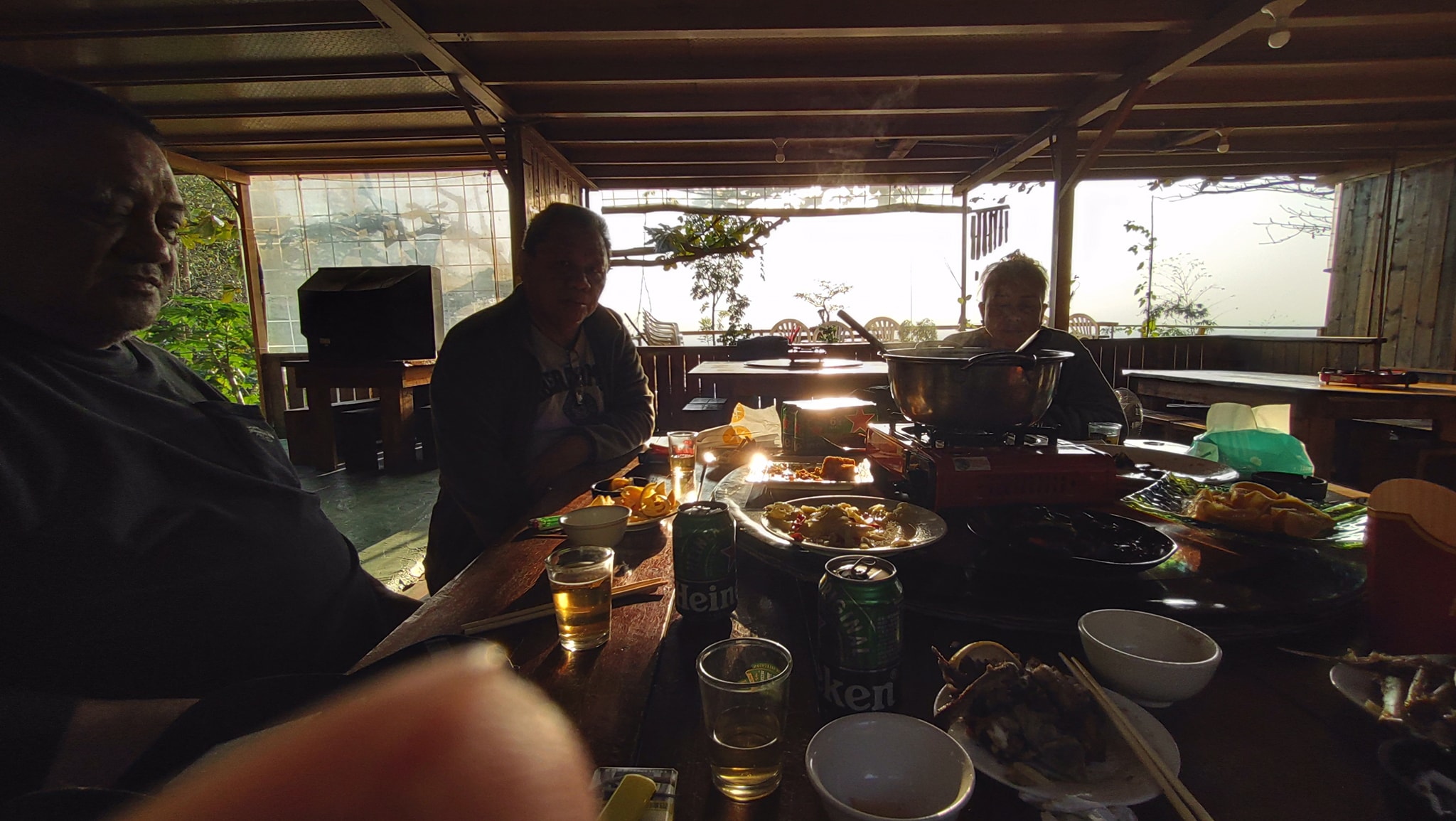
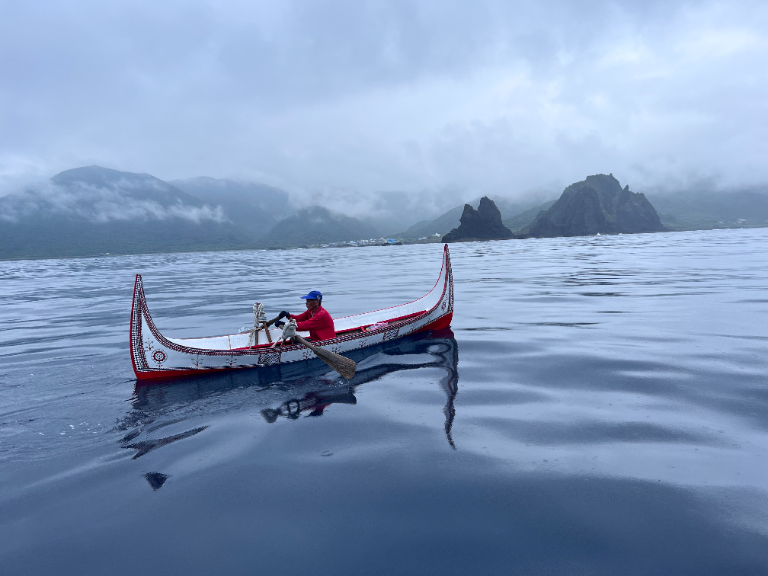
A photograph taken during the preliminary field-work for The Way He Sings (Photographed by and courtesy of Director Wu Yao-Tung)
This made me feel somewhat anxious since my job was to write an article based on the interview. However, putting the pressure of writing the article aside, observing how he expressed his thoughts was more interesting than focusing on what was said.
Wu is not the type of person known for having clear logic. How he expresses himself feels like he is trying to recreate what he has seen in its entirety, but with insufficient context, it isn’t easy to fully comprehend him. Nevertheless, he usually isn’t bothered by it and would go on to talk about what was on his mind before pausing to ask if what he said was helpful.
This is quite different from most documentary filmmakers. Wu seldom says that he has a complete grasp of everything. More often than not, he would admit that he has a mess on his hands and is trying to sort it out but unsure what to do, so why not just leave it at that.
Although those few meetings between us were relatively unproductive, I was sure of one thing: This film of his wouldn’t be done anytime soon. Therefore, I shouldn’t rush the interview. Sure enough, another two years would pass before the interview finally took place.
A Baseball Fan and Video-game Nerd in Old Taipei
We met at Wu’s studio on the rooftop floor of his home. It has a spacious terrace, and by the entrance are a couple of connected chairs with bright red slipcovers, and they come with the kind of folding table commonly used in schools. The space could easily be turned into an open-air cinema at night with a white screen and a projector. Even without any signage, the space can be easily identified by anyone as a space of someone working creatively in the arts. Sitting in one of the red chairs, I watched him skillfully make tea and then light a cigarette.
“Come and have a seat. I’ll make some tea first.” Although Wu usually speaks in Mandarin, he appears to me to be someone who would talk with a few words of Taiwanese mixed in. Perhaps because of this impression, I had mistaken him for someone from southern Taiwan. I then learned on that day of the interview that he was born and raised in Taipei, and before graduate school, he had never really left the city.
Wu mentioned that his formative years were rather ordinary and simple. His father, a businessman with a steady income, provided him with a financially stable and worry-free life. He said with a smile that he was a big nerd when he was younger. He didn’t do well in school and preferred to stay home and play video games. In college, he became fascinated with photography, so his father gave him the money for a camera, and he even had a well-equipped darkroom at home. His father provided him with everything, including things for his immediate use and things he might need in the future, such as the studio where we conducted the interview and the home he has with his wife and son that’s located downstairs from the studio.
Fascinated with photography, Wu applied and became an intern for a baseball magazine during the summer of his senior year in college. He attended baseball games daily and had a camera with a big lens in his hands. For someone who loves watching baseball and taking photographs, it was probably the best job in the world. He would go to the stadium every day and pick up a meal box first, and after he finished eating, he would watch the game and take pictures. Life was pretty laidback but also rewarding. During his internship, Wu sometimes followed other full-time photojournalists on business trips to Kaohsiung, and after they were done shooting that day’s game, they would go out at night and mingle over some food and drinks. They usually didn’t return to their hotel rooms till after midnight. If they were fortunate enough to stay in a nice hotel with a swimming pool, they would go for a leisurely swim before noon the next day. Because professional baseball games are scheduled in the afternoon, they would have some free time before the game. This internship experience inspired Wu to envision what his life would be like in the future, and the first blueprint that he came up with was to complete his military duty after college and then work as a magazine photojournalist, which he thought at the time would be an ideal life and career for him.
However, life usually doesn’t turn out as planned, and there are bound to be some unexpected developments along the way. On the brink of his graduation, a classmate told him that a new art school in Tainan was recruiting students, and he was wondering if Wu would also like to apply. The classmate thought the chance of being accepted as the school’s inaugural students was pretty high. Since Wu was waiting for his military draft notification and had nothing else to do, and the classmate who asked him lived near the school, so he agreed to do it, thinking that it would be a fun trip to his friend’s hometown.
“I thought there was no way I would get into a graduate school since I even had to cheat to get into college. Surprisingly, I was accepted, but the classmate who asked me didn’t get in.”
Rock ‘n’ Roll is Great, Karaoke is OK, Too
Wu said he only got 36 points on his English written test for his graduate school entrance exam, but the dean at the time, Han Pao-Teh, shrugged and said it didn’t matter because most artists weren’t that proficient in English anyway, and Wu could make it up later. Han then made an exception and accepted Wu into the school. Allegedly, the Tainan National University of the Arts (TNNUA) then established an English cram course for the incoming students the following year, and they were divided into two classes (Rabbit and Elephant) according to their language proficiency levels. Because the school only required the incoming students in the following year (the second year of the school’s founding) to attend the English cram course, Wu didn’t bother to improve his English. To this day, his English hasn’t improved that much. Still, despite this, he’s the type of person who doesn’t need to deliberately learn, because he has the natural ability to utilize specific kinds of expressions.
“Back in the Tainan National University of the Arts, Chang Chao-Tang and I would watch a lot of documentaries about rock ‘n’ roll and listen to rock music. I had some imported films, and he also had a collection, including films on Bob Dylan, Woodstock, and others. They were all VHS tapes. The production class we took back then only had a handful of students, and sometimes, if the others didn’t show up, Chang and I would smoke in the classroom, watch films, and talk about rock ‘n’ roll.” Wu had a delightful expression on his face as he reminisced about that period in time. He chuckled as he talked and then lit another cigarette.
He then continued to talk about the dormitory still being under construction during TNNUA’s inaugural year, and many students opted to rent and live off campus in Tainan. However, Wu was perfectly content staying on campus despite the ongoing construction. He even bought a pair of rain boots to better tread through the muddy construction site. “I wore rain boots to class. They looked cool and were slip-resistant,” he said.
Wu once stayed at school for many months without going back home. He often hung out with the dormitory’s construction workers. He said the workers would build a bonfire every night at the construction site using available construction materials. Wu would join them as they barbequed, drank, and joked around. Sometimes, they would even hang out at a karaoke bar at night. Wu fit in and got along with them really well.
He enjoyed talking to his graduate school professors about rock music, and he also enjoyed those karaoke nights with those construction workers. When interacting with people from different social classes and cultural backgrounds, he sees them as equals, and this is perhaps due to his ability to comprehend the unspoken part inside of other people, understanding their unspoken language of defiance, anger, and frustration.
If documentary filmmakers should look and act a certain way, Wu probably wouldn’t fit into that mold. Unlike many other documentary filmmakers, he doesn’t make films that righteously demand justice or express warm compassion for the underprivileged. This middle-aged Taiwanese uncle also isn’t one to dabble much in experimental avant-garde art.
If I were to describe it, I would say that he and the people he cares about are like inconspicuous beings living in the real world, but each has a distinct personality, and each has regrets and sorrows. We see this in Rei Ming Yue Dui, with the upperclassmen from his school who were in a band, and in Swimming on the Highway and Goodnight & Goodbye, with the young guy who had been through some tough times in life. Also, in I’m Here, we see a seasoned theater figure. He and Wu became instant friends when they first met because they are very like-minded. The same also applies to the subjects in his latest film, Blacklist Studio and Ngerenger Kazangiljan.
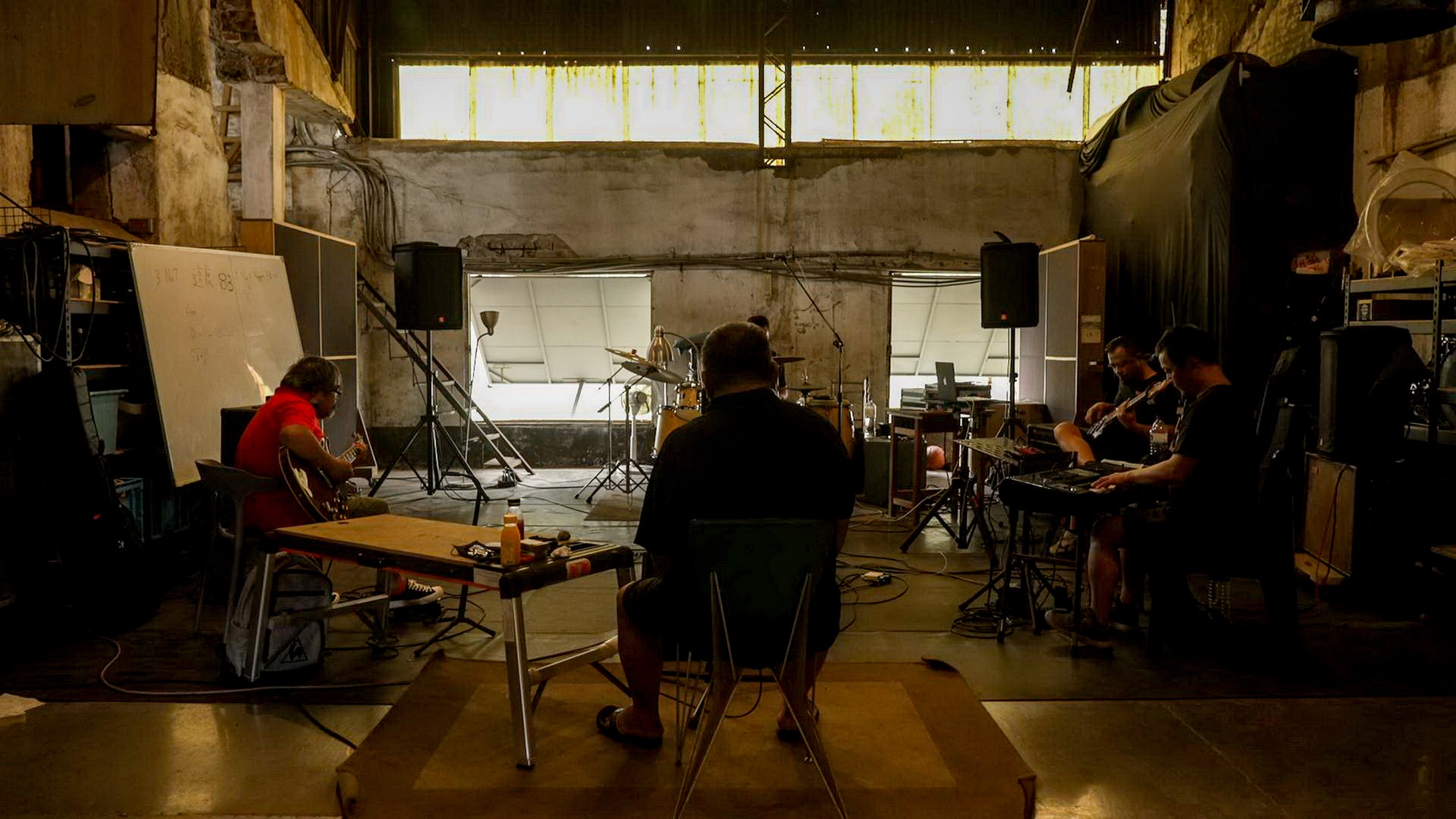
Film still from The Way He Sings, with Ngerenger Kazangiljan and other musicians working in a recording studio (Photographed by and courtesy of Director Wu Yao-Tung)
How Hard Would It Be to Film a New Album?
In 2019, Blacklist Studio was presented with the Golden Melody Awards’ Special Contribution Award. The band may be relatively unknown among younger listeners, but for many middle-aged Taiwanese, Blacklist Studio is more than just a band; it embodies a zeitgeist significance.
The band was formed after martial law was lifted in Taiwan; it was a time of social unrest and change, with social movements actively rising. The band members consisted of a group of ideological and talented young people, including Wang Ming-Hui, Chen Ming-Yu, Chen Ming-Chang, Keith Stuart, Chen Chu-Hui, Christine Hsu, Lin Mei-Mang, Ara Kimbo, Will Lin, and Susu Yeh. They released their first album, Songs of Madness, in 1989, and many critics saw it as the album that kickstarted the “New Taiwanese Song Movement” in the 1990s. Songs of Madness presented unprecedented music in a genre of its own and had elements of edgy rap, riotous rock ‘n’ roll, and soulful folk music. The songs were inspired by the anger, bitterness, irony, and hope the creators had experienced. Songwriting was a way for them to express their dismay and profound reflection on society, and the songs created served as a mirror to show what was really happening in the society of Taiwan. Listeners were prompted to reflect, seeming transformed into dissidents who used music as a weapon. Blacklist Studio not only impacted the listeners of that era but also inspired many other talents in the music industry. Taiwanese recording artists Lin Sheng-Xiang and Jutoupi have both expressed that Blacklist Studio was the reason that they’ve chosen the creative path of “writing about the stories of our land and singing our songs.”
Blacklist Studio released its second album, Cradle Songs, in 1996. The album focused on the sounds of Taiwan’s indigenous peoples and featured tracks that integrated indigenous elements. However, many years then passed without any news on the group’s third album.
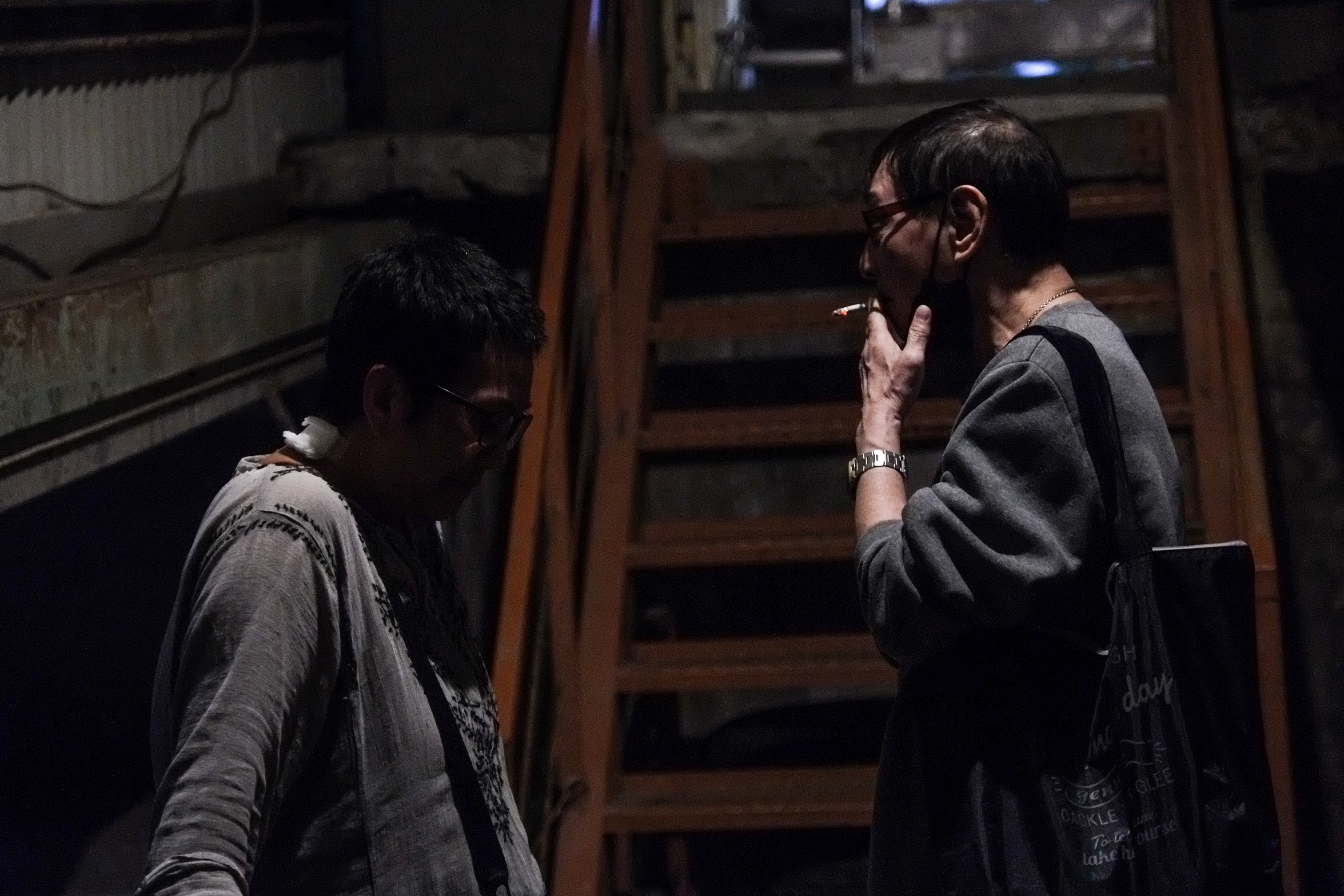
Film still from The Way He Sings; Blacklist Studio founders, Wang Ming-Hui (Joe) and Chen Chu-Hui (Photographed by and courtesy of Director Wu Yao-Tung)
Ngerenger Kazangiljan, on the other hand, was born in Makazayazaya (Majia Township) in Pingtung County and is of Paiwan descent. For those who follow the Taiwanese music scene, you probably recognize him as the winner of the 2011 Golden Melody Awards’ Best Indigenous Language Singer. Those who care about social movements in Taiwan probably came across his name earlier; Ngerenger Kazangiljan formed the music collective, Abomusicabo, with several indigenous musicians after Taiwan’s devastating 921 earthquake in 1999. They organized concerts in disaster areas to help heal people’s broken spirits with their music. Also, they sold their albums on the streets to raise money for disaster relief in indigenous townships. If back in those days you’d ever been to the department store plaza by the Taipei Main Station, you probably saw Ngerenger Kazangiljan there singing with his soulful and powerful voice.
“I started filming them because at the end of 2020, I was still in the middle of shooting Wang Mo-Lin, who was in the midst of a theater production, and Wang Ming-Hui was in charge of the music. Mo-Lin then asked if I had ever heard of Blacklist Studio. I exclaimed, of course! I bought their cassette tapes and CDs and even have their vinyl records at home. Mo-Lin then told me that Blacklist Studio might be releasing a new album and asked if I would be interested in filming them. Without a doubt, I was interested! Then in January 2021, I went to Pingtung with Mo-Lin and Wang Ming-Hui to visit Ngerenger Kazangiljan.”
With just those few words, Wu had explained how his new film came to be. Without an overly grand motive or an excessively sentimental original intent, he said it was simply because he had made the film, Rui-Ming Band, in his younger years, so he has some experience with filming a rock band. Moreover, what he had imagined was a group of seasoned musicians getting together to play and record music, and he thought the filming process would be pretty fascinating and exciting, so he didn’t want to give up on the opportunity. It was just the making of a new album; how hard could it be to film it, he thought.
Lost Songs and an Overly Quiet Protagonist
I finally started to understand why the filming wasn’t going so well for Wu after seeing the first cut he had submitted to the National Culture and Arts Foundation. It was apparent that the story wasn’t about a legendary band’s collaboration with an award-winning singer and their return to glory. What was documented by Wu at the recording sessions wasn’t the exciting chemistry sparked with musical elements of indigenous ancient melodies and Western blues; instead, what was captured was a sense of loss and lack of freedom prompted by deliberate improvisation.
“Throughout the recording process, the happiest and the most relaxing time was after the band practice, when the musicians had retreated to the lodge. They would burn a lot of wood to build a fire and sometimes grill some food caught or foraged from the mountains. Everyone would sit together to drink and sing. Actually, those were the most important moments.”
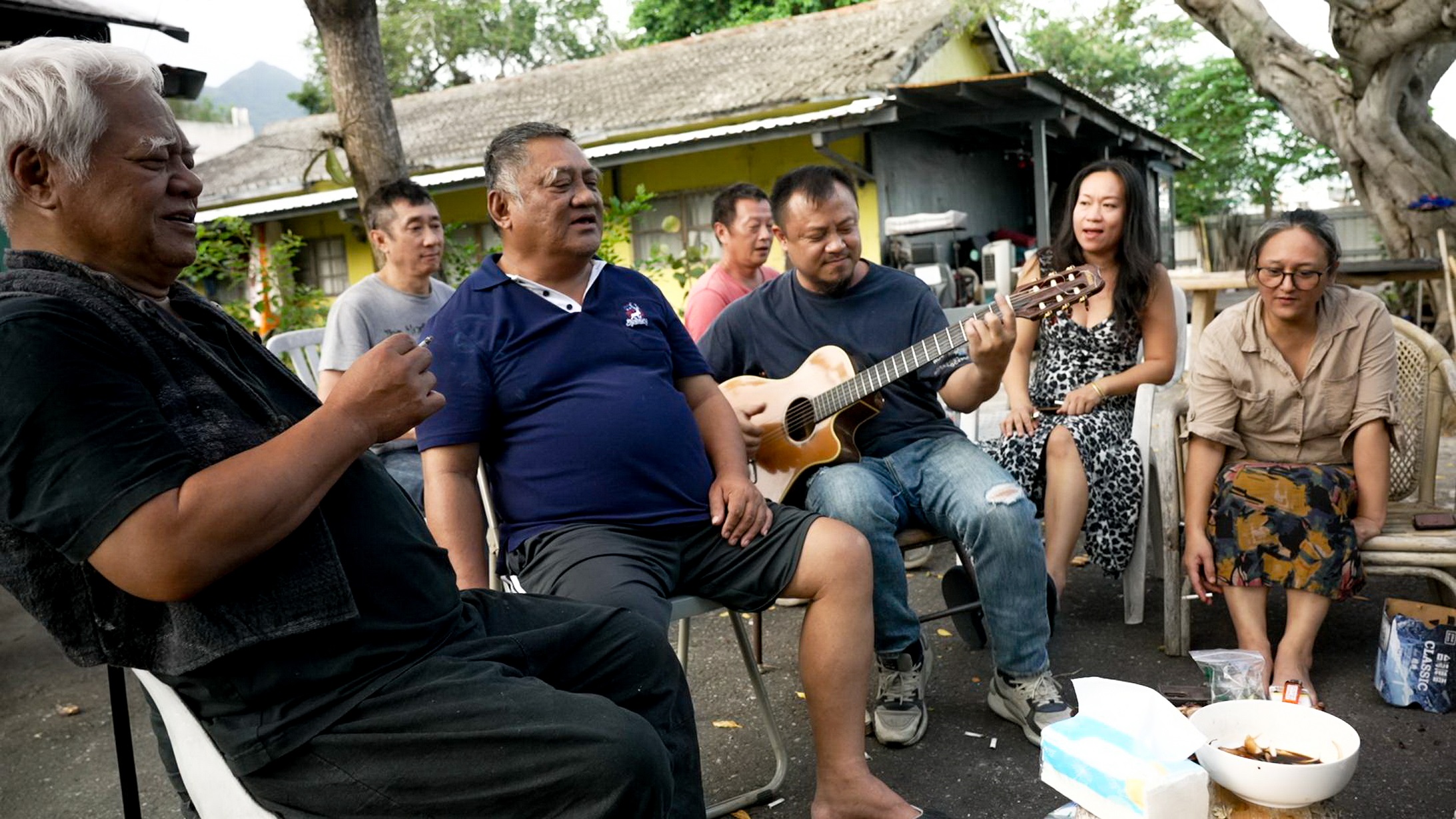
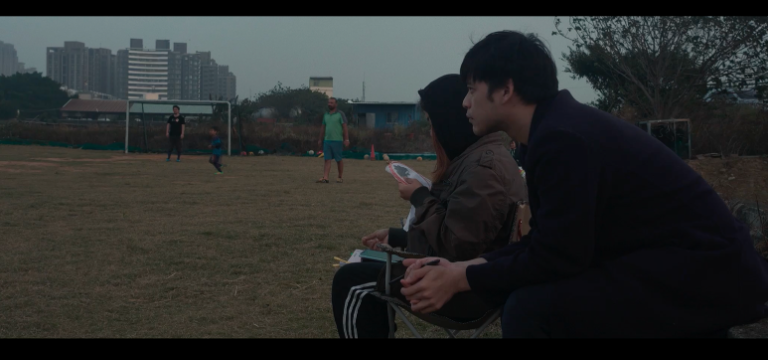
Film still from The Way He Sings; Ngerenger Kazangiljan, other musicians, and their friends barbequing and singing (Photographed by and courtesy of Director Wu Yao-Tung)
Thinking back to when the filming first started, Wu recalled how much he enjoyed listening to their music rehearsals. However, after filming for a while, he noticed that despite the increasing number of rehearsals, the musicians and Ngerenger Kazangiljan weren’t building a deeper mutual understanding, but rather, their focus and enthusiasm for the music were dwindling, and the vibe in the rehearsal room even grew more tense. At that point, Wu couldn’t neglect the look of concern on Ngerenger Kazangiljan’s face. Toward the later stage of the filming, he then decided not to pay more visits to Wang Ming-Hui and Chen Chu-Hui of Blacklist Studio, and instead, he began to spend more time shadowing and shooting Ngerenger Kazangiljan. Usually, he would head to the recording session at the rehearsal room in Taitung and then follow Ngerenger Kazangiljan back to his home in Pingtung, or sometimes it would be the other way around. Whether heading east or traveling down south, each time he went out to film, it was a round-island trip.
Perhaps because he grew up in a tribal village chief’s home, Ngerenger Kazangiljan is very hospitable. Whenever Wu visited him at his home, there was never a shortage of food, drinks, or song-singing, and everything would be very well organized. However, Wu was hesitant and unsure about the hospitable arrangements because he wasn’t there to be a guest; he was there to make a film. Also, Ngerenger Kazangiljan was always rather quiet, and Wu would stress over the silence, feeling unsure of how to break that silence because Ngerenger Kazangiljan wasn’t speaking much.
“Of course, I could apply the method I’ve learned from my graduate school advisor, which would entail grilling him with questions about his life from childhood to adulthood and his family of origin. However, for things that stem deeper, if he didn’t say anything about it, it was quite impossible to inquire and get it out of him. He has been around the block for a long time and has had many more complex life experiences. Honestly, Ngerenger Kazangiljan doesn’t need me to make a film about him. The fact that he was willing for me to hang around was already a privilege for me.”
Wu mentioned that he finally realized how to shoot Ngerenger Kazangiljan on the last filming day. Ngerenger Kazangiljan was quiet as usual on that day, but Wu was no longer anxious about the silence and wasn’t thinking about what questions to ask to break the awkwardness. He also wasn’t thinking about what kind of footage to capture. He was just there reading some newspaper, smoking, and having tea with Ngerenger Kazangiljan. Like an old married couple, they sat quietly there for an entire afternoon, and then it was dusk.
I think this long shot is very important for this film. It belongs solely to the filmmaker and the person he was filming.
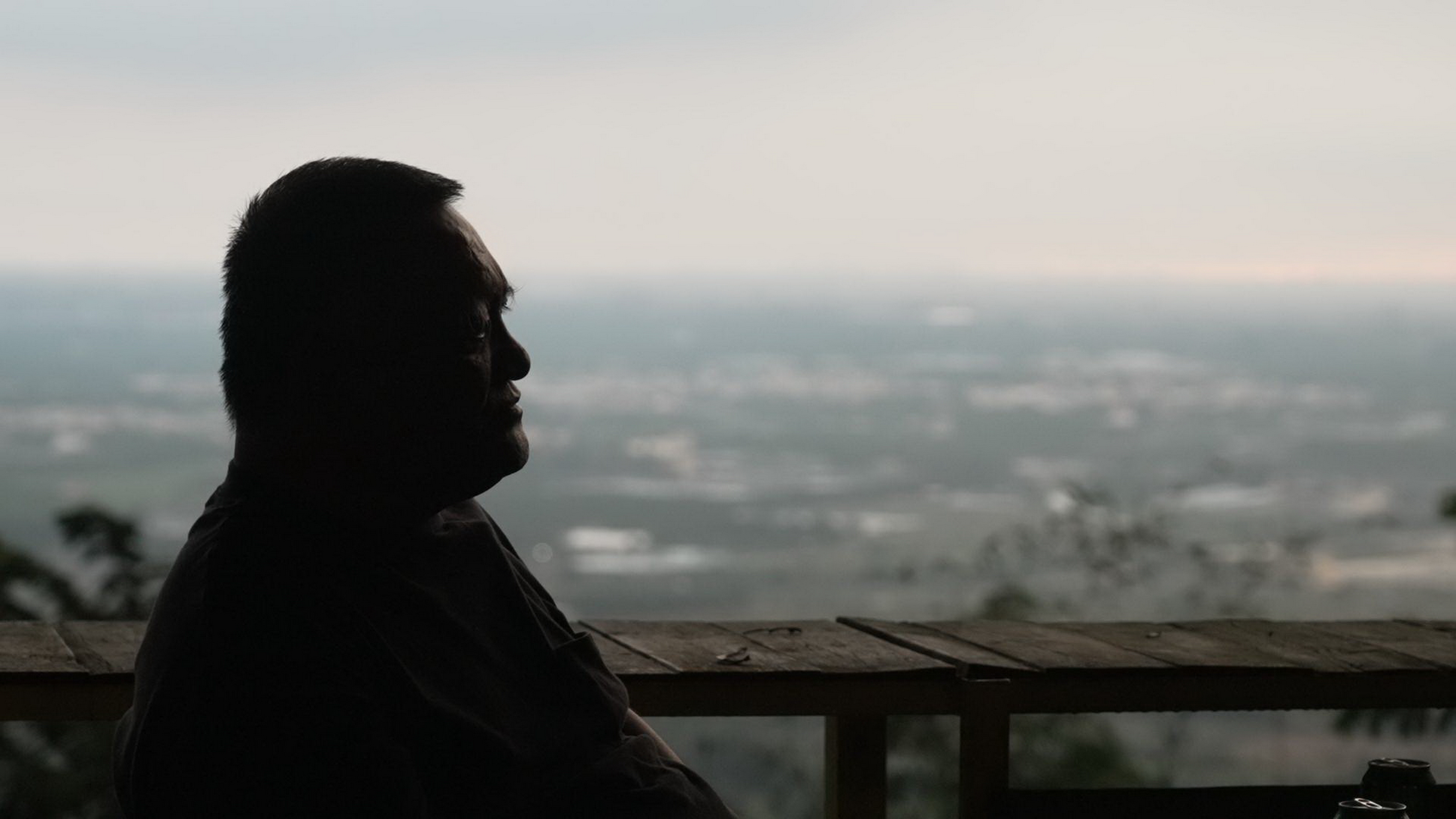
Film still from The Way He Sings; a profile shot of Ngerenger Kazangiljan (Photographed by and courtesy of Director Wu Yao-Tung)
Not Speeding Down a Highway, Taking a Winding Path Instead
After the filming was done, editing awaited. Wu Yao-Tung chose to work with film editor Duan Pei-Yao again because of the trust they had formed while making Goodnight & Goodbye. He handed all the footage to Duan without giving any additional instructions on the film’s narrative direction.
Duan is spotted in several scenes in The Way He Sings because she started accompanying Wu on location at the initial stage of the filming. She filled in and took care of things that the director was too busy to handle, and her role in the film far surpassed that of a typical film editor. While on location, she was standing further back than the director, so Duan wasn’t just seeing the film’s subjects; she was also seeing Wu Yao-Tung, the person holding the camera.
“Working with Wu Yao-Tung is probably a dream job for a film editor because he would never bother you and accept all the editing work submitted. He would never shut down your ideas. I later realized that it probably has to do with his personality. He’s not the type to want to dive too deep into things. It feels like he’s a bit afraid of being sucked in too deep.”
Duan’s description of Wu was surprisingly not as impulsive and rash as the image he projected in his previous works; instead, there was a fragile and weak side. I tried hard to look back and search for transcripts of past interviews with Wu, wondering if I had overlooked any hints hidden in his seemingly unrestrained and nonchalant words. Finally, I found the following words by him, which were punctuated with expletives for some added punch: “What I saw at the rehearsal space, I wouldn’t consider a wake-up call. What I do know is that everyone is holding some kind of pain inside, and I don’t want people to hurt each other because of their pain.” Perhaps it wasn’t a fragile weakness but a middle-aged man’s generous compassion.
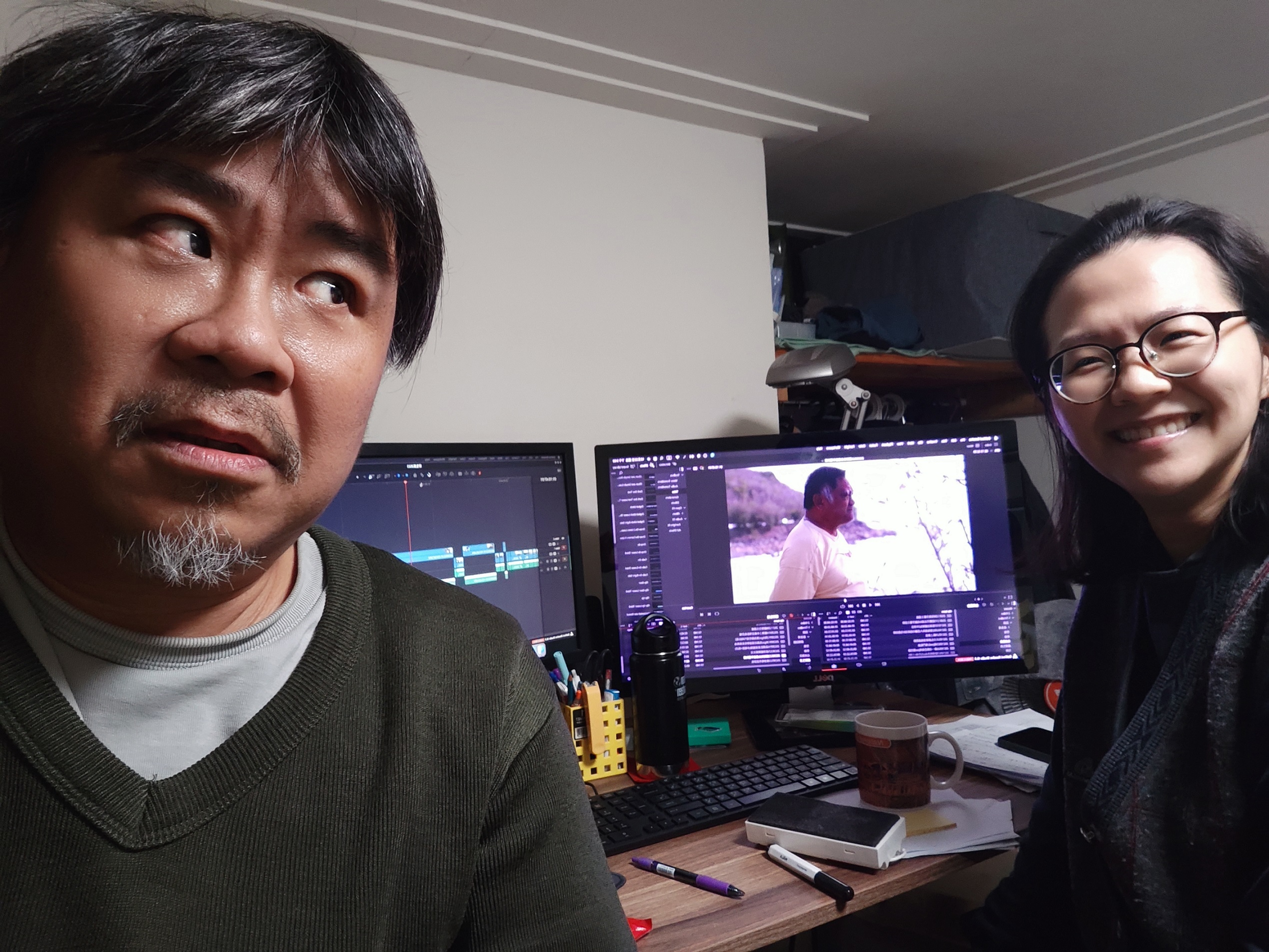
Director Wu Yao-Tung and film editor Duan Pei-Ya (Courtesy of Director Wu Yao-Tung)
As I reached the end of this article, I received the latest cut of the film from Wu. After watching it, I thought about what he had mentioned earlier about how things weren’t going so smoothly, but perhaps those were not necessarily roadblocks he had encountered. Instead, it was a necessary process for the creator, for him to decide which path to take with the story. I’m not sure if the path he had chosen for The Way He Sings was naive or worldly, but at least it’s safe to assume that he understands that not every story has to take place as one speeds down a highway, ending only when the driver and the passengers have crashed and burned. Some stories can only unfold along a small winding path nestled deep in the mountains, and you must walk diligently on your feet to make your way through. Some stories even require you to take off your shoes and traverse through rivers and seas before reaching your destination.
Not speeding down a highway, the Wu Yao-Tung, who has changed his course and is traveling on a winding path, is also quite interesting.
*Translator: Hui-Fen Anna Liao
More CASE STUDY