FOCUS
A Slug's Delusions
Jui-Wei Hung
2026.09.16


"I had surrendered to the way of things, like an inert bloated slug watching the salt slowly being poured over my body."
—Kieran Yates, All The Houses I've Ever Lived In: Finding Home in a System that Fails Us
It wasn't until I had grown up that I realized the game Monopoly that I loved playing as a child was actually quite cruel (even though its name is plainly "Monopoly", the exclusive control over something). In this board game, those who claim land early can build houses and collect ever-increasing rent. Those who came later can only sigh, pay the rent, and hope for a fluke from the Chance or Community Chest cards. In the more dire situations, players might even prefer going to jail to avoid going bankrupt.
The game's only mercy lies in the knowledge that even if you go bankrupt, you can always start over. Perhaps in the next game, you'll become the owner of great estates with wealth piling in your coffers. Alas, the same isn't true in real life.
On the night of August 26, 1989, tens of thousands of people lay down in the middle of Taipei's Zhongxiao East Road, marking the striking beginning of Taiwan's housing rights movement. That night, on that stretch of prime real estate, crowds were so dense that it left no room to actually lie down. Theater troupes also showed up to put on performances such as Monopoly Dance and Snail Song, using various art forms to support those beaten down by the realities of the housing market, or those who never had the means to vie for housing in the first place.
Now, over 30 years later, there still exists a multitude (and probably more than ever) of "snails without shells". Unstable housing conditions have become the emerging norm for today's younger generations. As housing difficulties intensify, the housing movement has gradually shifted from the initial goal of "home ownership for all" to "adequate housing for all". Instead of focusing solely on high housing prices, the movement has expanded the perspectives and conceptions surrounding housing rights.
From works included in the NCAF Grant Portfolio Archive, we can also notice artists' concerns about housing issues, touching upon various aspects:
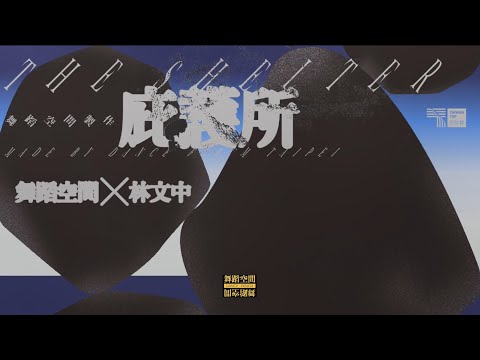
Some artists use their craft to confront the worst forms of displacement, such as The Shelter by Dance Forum Taipei and Wen-Chung Lin (林文中), which incorporates the soundscape of interviews with homeless people in Wanhua from Ting-Fu Huang's (黃庭輔) documentary 4891. It uses bodies curled up among cardboard to depict the plight of the unhoused. Yun-Chu Chang's (張韵苧) Under the Stars - International Homeless Field Painting Project originally intended to uncover the hardships of homeless people in Paris during the Olympics through face-to-face portraits. However, due to the French government's forceful eviction campaign, the project instead focused on finding the objects or traces left behind by those "cleared away" from the city.
Even if you finally have a home, there's no guarantee you'll be able to settle down there. Written by Zhan Jie (詹傑) and produced by Fantasy Theatre, the play Homeless depicts the cramped living conditions of two generations sharing a small urban residence. With compounding pressures of mortgage payments and the dangers of a house built using sub-par concrete, the only escape is a massive crack in the ceiling.
In He Wun Jin's Essay Writing Project (published as A Place to Nest (一個棲身的地方)), the section "Space Writing" revisits all the rooms the author has lived in, and describes how she moved and escaped from place to place. She also recounts how her mother filled the emptiness within herself through hoarding and the way she raised her daughter.
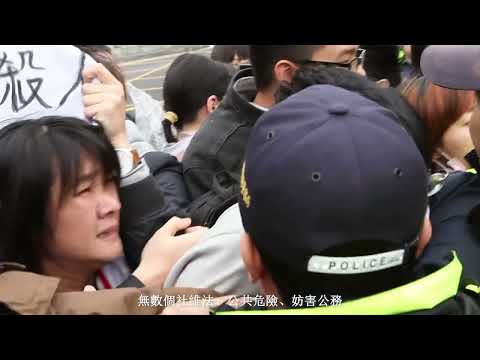
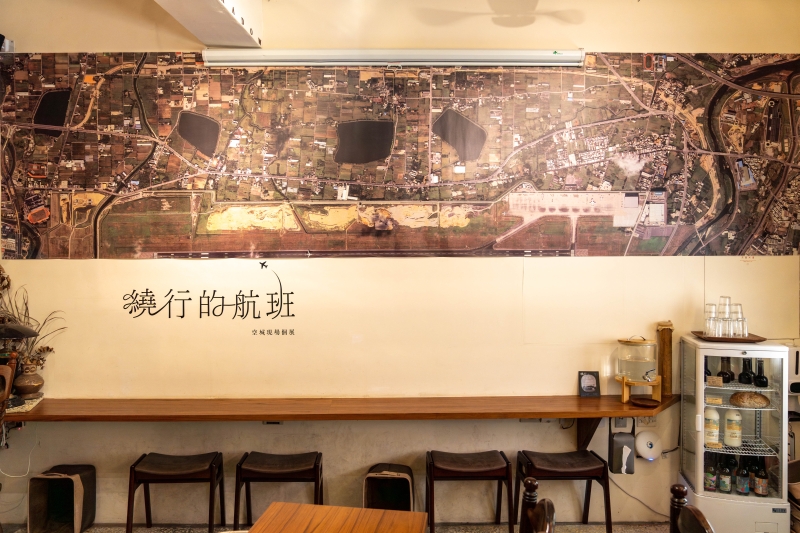
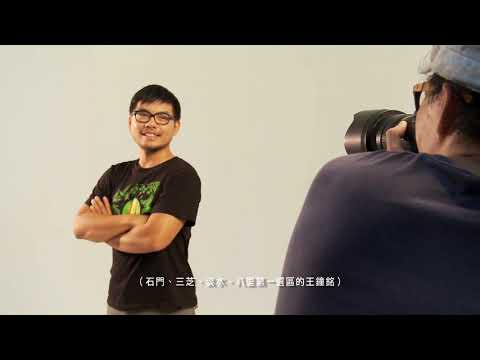
Yu-Ting Lin's (林宇庭) Daguan: once our home(s) and Tso-Hsin Tang's (唐佐欣) Resistance Through the Cracks Photo Journal of Daguan Community both put the spotlight on the Daguan Community in Fuzhou, Banqiao District, documenting how residents accused of "illegal occupation" by the government rose up to fight against eviction, before ultimately bidding farewell to their homes about to undergo demolition. The Delayed Takeoff from Taoyuan Solo Exhibition documents the long-term on-the-ground actions of Chung-Hsiang Wang (王正祥) and Yan-Xiang Lin (林彥翔) in the Taoyuan Aerotropolis, the largest zone expropriation project in Taiwan's history, as they accompanied residents and witnessed their relocation.
Through works such as Unfinished Progress and Housing, documentary director Show-Tsai Lin (林謙勇) explores issues of land justice and the shifting urban landscape. His works underscore people's multifarious conceptions of "development". He bravely turns the camera toward his own family, "beneficiaries" who have accumulated assets through real estate transactions, initiating an intimate intergenerational conversation and self-reflection.
In her book Living in the Netherlands: A Life Journey of an Architectural Anthropologist, Tsaiher Cheng (鄭采和) draws on more than a decade of experience living in and observing the Netherlands to offer solutions for Taiwanese society. Li-Wen Huang's (黃力文) overseas art travel project Building Chosen Families Through Art - The Possibilities of Alternative Spaces started from her co-living/creative community, sunchoya. In this project, she visited similar vibrant alternative spaces in Japan to rethink the possibilities of artistic creation and "housing". While the social ideal of "housing for all" (from the 1989 Snail Manifesto) remains a distant dream, the diverse conditions expressed by these art projects seem to be collectively exploring the question: If we lack shells, how do we live well as slugs?
*Translator: Linguitronics
Explore Granted Projects
 (23)_6_1562039532050.jpg)


_1672387771726.png)