CASE STUDY
The Home in the Viewfinder – The making of Yu-en’s Etude
Wu Fan
2026.08.19


In the summer of 2023, I received the invitation from the National Culture and Arts Foundation (abbreviated as NCAF) to observe and write about the making of Lin Yu-en’s Etude from my perspective as a documentary filmmaker. At that time, I was working on the postproduction of XiXi, my documentary feature project, which was an extremely challenging task due to its intimate nature. I could not imagine how it was even possible for me to observe the work of a director I did not know in person and the making of an intimate home-movie documentary when I was still occupied by my own.
I wanted to make sure I was the right person for the task, so I decided to have a talk with Lin and we met at a café in Zhishan, Taipei, which happened to be the neighborhood where he grew up. “There used to be more trees, but it is pretty much how I remember it,” says Lin. From the scenery to the people, he told me about himself, his mother, his sister, and the always absent father – the main characters in Etude who keep respective secrets in their minds.
Lin told me something which really struck me that day: Just after he conceived a framework for editing, the family relationships soon “exploded” in an unexpected way, and he was still in aftershock when we met. In a half-joking but still serious tone, he laughed sarcastically and said, “Perhaps Etude is about the futile attempt of a documentary filmmaker who wanted to mend family relationships by making a film but eventually failed.”
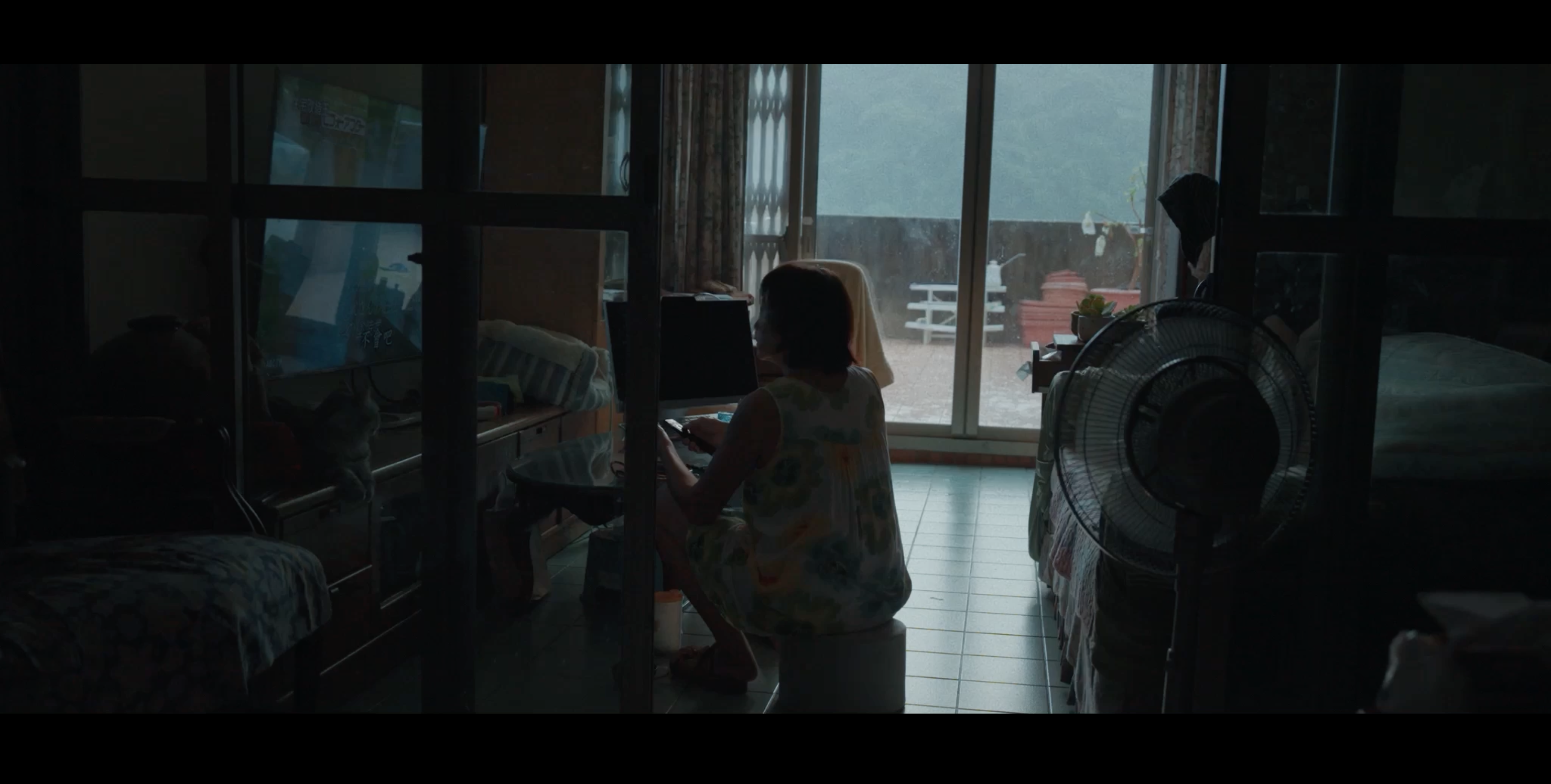
Film still from Etude (Courtesy of Director Lin Yu-en)
During our brief coffee time, I could feel that Lin had an open mind, with which he allowed the uncertainty to happen in the creative process and saw it as a positive inspiration. His camera became his close partner as he raised questions about life, and his filmmaking thus directly and fundamentally changed his inner world. I had a similar feeling concerning my own work, in which I often depended on my camera to deal with the unsolvable problems of life as well. Besides, his sharing of the difficult moments experienced in production was a relief to me – I was not the only one suffering and being troubled. I told myself: I guess I should really take the task.
Finding Freedom in the Frame
In the world of documentary photography in its broader definition, Lin first made his name as the photojournalist for The Reporter. His interest burgeoned in college with a dream to practice humanitarianism as a documentary photographer. Graduating with an MA in Photography and Urban Cultures at Goldsmiths, University of London, he soon joined the newly-founded The Reporter to work as a photojournalist, where he paired up with a journalist to complete many in-depth investigative news stories based on solid fieldwork.
With an increasing attention to video and audio content as a trend, Lin was asked to produce short documentary videos, which gave him the idea to make his own documentary films. He explained to me that still photography crystalized the captured moment, unlike moving images which contained elements related to both “time” and “space.” “Still photography can be ambiguous for interpretation, and it is easier to make the camera invisible,” said Lin, “but for moving images, you as the camera-holder cannot avoid the fact that your relationship with the filmed subject is revealed and utterly visible in front of the camera, which is very interesting to me.”
When he was still in The Reporter, his work for the investigative news story “Fraud, Exploitation, Bloods and Tears of Fishing” benefitted from the documentary filmmaker LU Yu-Jui, who generously provided the materials originally for Lu’s Squid Jigging Fishing Boat. Lu was granted the opportunity to travel with the fishermen in the long-distance fishing boat for six-months to experience and closely observe their life, which was documented and filmed. It was a creation process Lin had always dreamed of and he was greatly inspired by it. Documentary filmmaking allowed such a possibility in time and space, offering the kind of freedom Lin had never experienced before, so he decided to leave the job as the photographer in The Reporter and passed the entrance exam to become a student again in the Master's Program in Communication at National Chengchi University, where he began to explore the possibilities of documentary filmmaking.
Shortly after, he brought his camera and moved to Yunlin. He spent a lot of time with Tu-Dou and Ming-Yi, two teenagers he met when working on The Reporter’s serial news story “In Their Teens, In Their Ruins,” and their life together was made into the documentary short In Their Teens. During the making of In Their Teens, Lin kept asking himself: did his inherent “polite personality” prevent him from going deeper into Tu-Dou’s heart? Or did he truly respect the fact that “there is always a corner in Tu-Dou’s heart which should be protected from the light?” As a documentary filmmaker, how should one balance the relationship with the filmed subject, to carefully deal with the boundary between the filmmaker and the filmed subject?
When In Their Teens won the 58th Golden Horse Awards for Best Documentary Short Film, which came with the recognition and attention from the film circles, these teenagers’ difficult situation remained the same without the slightest change. The film’s success became a contradiction to reality, and it troubled Lin. Things like this gave him a new and different idea to make himself the “filmed subject” in his work, revealing himself to the camera in the most honest way: “I feel like if I did not place myself in the position where Tu-Dou and Ming-Yi used to be, it would be almost impossible for me to profoundly understand how they felt, and if not, I should not have the right to intrude on other people’s life with my camera.”
It was with this mindset that Lin decided to start with himself for his semester project. Like an étude, Lin practiced to film himself and his family: “the initial idea came from my distant relationship with my mother, and because of which, I used to avoid her as much as possible, but when I was working on the project, I was already thirty years old, and I hoped to let her know that now I could begin to understand her situation, and I wanted to make this film for her as a small gesture of love; I hoped that my filmmaking could make some positive changes to the family relationships.”
The alienated son now visited often with his camera, making his mother happy as she should be, but as the filmmaking proceeded, the complicated and unhealed wounds engraved in every family member’s heart were also revealed by the camera: not long after Lin Yu-en was born, his father moved to China to work as a supervisor-from-Taiwan1 and soon had a second family there, causing his first marriage with Lin’s mother to break down. Since then, Lin’s mother made a living as a piano tutor and raised her two children by herself all alone in Taiwan. “She sacrificed her prime years for the sake of her children, to maintain a functional family,” Lin describes it in the project proposal, “but because of my mother’s doubled effort and expectation, with which she had raised us in an extremely strict way, we felt very alienated from her.” She became a fierce mother with loads of financial burden on her shoulders, but her harsh gesture of love suffocated her children. For many years, Lin’s older sister, who is a mother now, had avoided her mother as well to break away from the childhood trauma as she desired to give her children a different, happier and more comfortable childhood.
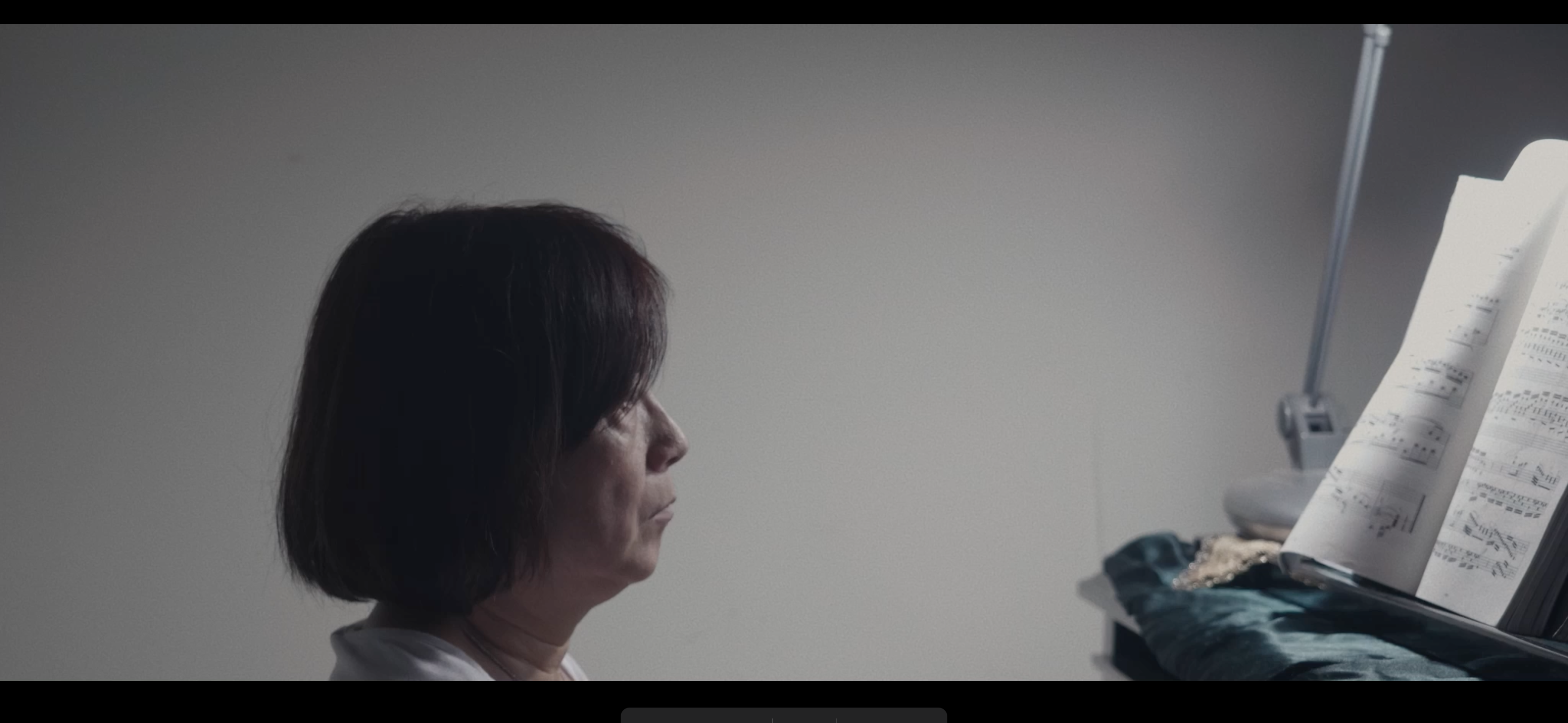
Film still from Etude (Courtesy of Director Lin Yu-en)
However, Lin’s gentle gaze dismantled the rigid shell of the “tiger mother.” The daily moment of the mother “making stir-fried shredded pork with pickled cabbage for the daughter” was a silent expression of love. With its tender gaze at his mother, Lin’s documentary short touched the jury for the 2021 New Taipei City Documentary Award and won the first prize. However, what he did not foresee was how his short film adopted a narrative which hurt the feeling of his sister: “later I realized that I made this film out of the conviction that I should be more understanding about my mother’ situations, but I had ignored my sister’s perspective.” Lin thus figured out that his documentary short, originally a semester project, opened up a series of questions toward the idea of family and his family relationships, which demanded a full-length feature to search for the possible answers as well as to give a truthful and justifiable description of his sister.
The silent conflict between Lin’s mother and sister had not been resolved yet, but Lin brought the camera to visit his father who had been absent for more than thirty years. It was not easy for Lin to meet his father in the beginning, especially with the objection from his mother, but as the filmmaking process reached the final stage, he adopted a much more normal attitude for these visits, and the sense of “normality” meant everything to him. He wanted the father character to be a full-dimensional and relatable one in the film, rather than a superficial and stereotypical “troublemaker.” It was not just an artistic choice, but echoed Lin’s wish that his filmmaking could help him better understand his father’s life choices and eventually no longer see his father as a stranger in his life.
After decades of separation, Lin and his mother, father, and sister “reunite” in the film with their stories threaded by the camera and merged via the act of editing. Their wounds were interlinked, which made the editing more challenging since showing more sympathy with one might not do justice to another. Lin thus invited Director Su Ming-yen to join him for such a difficult task.
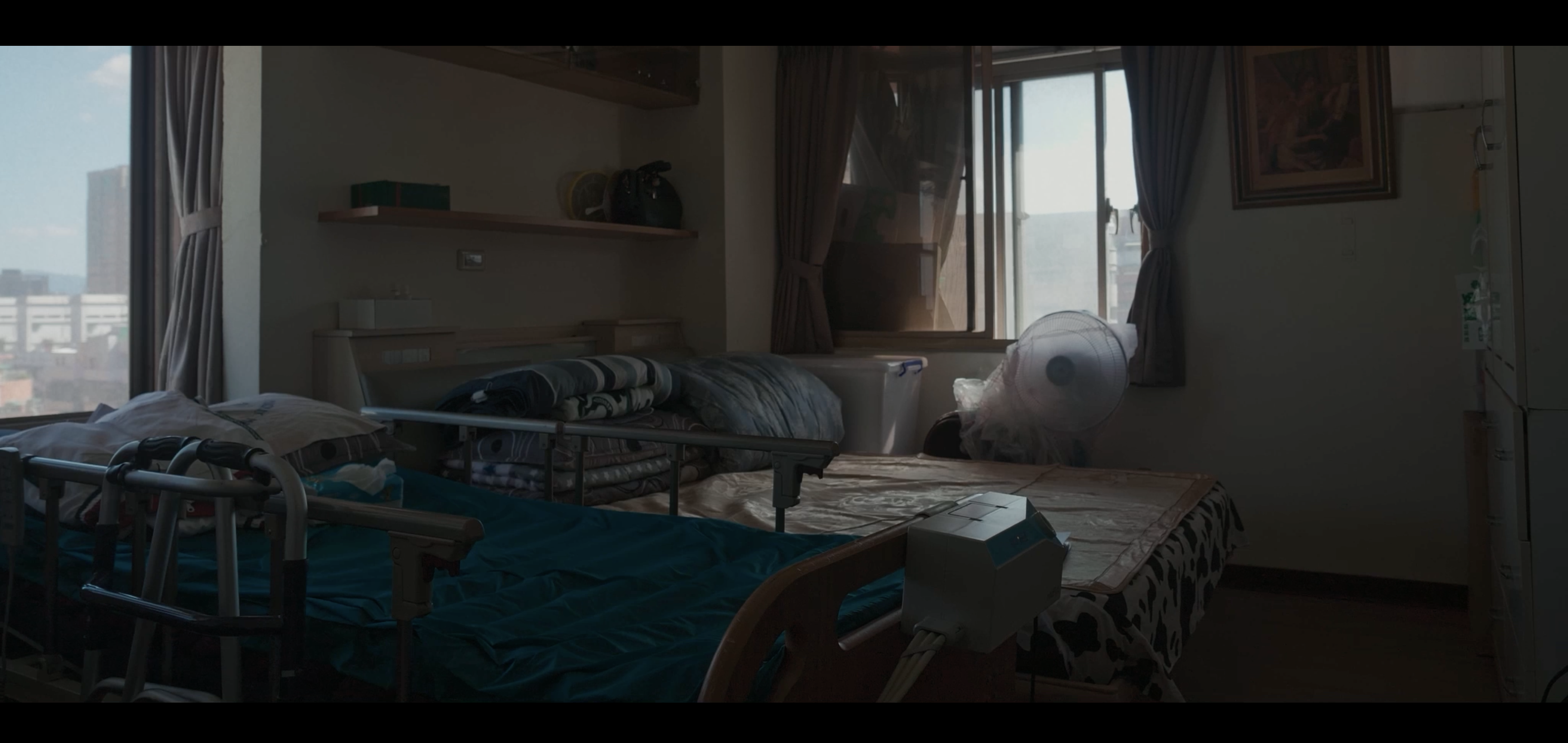
Film still from Etude (Courtesy of Director Lin Yu-en)
“I’ve known Su for almost ten years,” said Lin, “when I returned to Taiwan after graduating from Goldsmiths, I had a part-time job at a cafe, and Su’s studio was upstairs. He got the ‘Kaohsiung Film Fund’ for his Coop of Blemishes’ and was filming it at that time, so I helped him with the still photographs, and we hit it off right away. Later I joined in The Reporter, and saw him finish his Flow. Although it had not occurred to me that I would make my own film one day, I really admired him for doing what he always wanted to do.” The two became close friends, and Lin invited Su to be the editing advisor for In Their Teens: “Su knows cinematic language, and he is good at structure; when I was editing In Their Teens, Su would come to my place every one or two weeks and spend one or two hours with me working on the structure of the film.”
In fact, at the early stage of the filming of Etude, Lin would seek advice from Su every time his family developed a new and unexpected scenario. “After Su saw all these materials from the past years and began to edit the film,” Lin laughed and said, “I often felt so naked that I revealed everything to him without reservation.”
As a filmmaker myself, I have been wondering how Lin and Su, two directors with different styles and approaches, collaborate in editing. From my observations so far, perhaps it depends on a shared conviction to create a film of artistic freedom with the unique signature corresponding to the filmmaker’s personality rather than pursuing a neat and carefully-structured one. Their differences result in a mutual respect and the artistic quality reveals how they cherish each other.
The Editing Workshop: “Family Relationships Are Like Playing Pool”
In the autumn of 2023 when Etude was in the editing stage, it was selected by the NCAF Partnership Workshop, with Lei Chen-ching as its editing mentor. One day morning after the strike of typhoon, I followed Lin and Su to Master Lei’s home to observe the first day of the workshop.
Back in his school days at National Chengchi University, Lin was a student in Lei’s class, so they were not completely strangers when they met again in the workshop. That day, Lei, who had watched the rough cut, asked a series of questions to Lin and Su. The three of them not only talked about the materials in the rough cut, but also extended the conversation to how they grew up, and how home-movie documentaries reflected society across different eras by looking at a family and their members growing up in different generations.
At the end of the day, Lei sighed and said, “Lin’s family are all full of drama, which makes their family relationships more complicated and loaded with love and hatred. Like playing pool, you see the billiard balls colliding with each other. I think the mindset we are looking for in editing should be to cherish each other – perhaps it is impossible for these family members to fully understand each other, but it does not matter, and we do not need to struggle for a solution, because it is totally ok to go on without understanding each other. Home-movie documentary is like a window for the family and the audience to talk about things you usually avoid in your everyday conversation.”
From the Stewed Pork in In Their Teens to the Stir-Fried Shredded Pork with Pickled Cabbage in Etude
From In Their Teens to Etude, I notice Lin’s talent for spotting people’s hidden wounds, suppressed love, or fragile parts in the everyday triviality, such as how he gazes at his father’s shaky hand raised in the air in Etude, or the small room packed with flustered teenagers preparing baby formula in In Their Teens. These images are plain and yet honest, like the most ordinary moment in life which can happen anytime and everywhere.
I was curious about his method in filmmaking, if there was a particular one, and Lin told me that he was not the type of director to make plans in advance. Quite on the contrary, he enjoyed the feeling of being fully absorbed in the view from the lens and how he shared the real life of the filmed subject which thus allowed a long-term gaze to investigate the everyday details: “for example, when I was filming In Their Teens, I moved to Yunlin and had lived there for a year, where I had a feeling that things would continue to happen as long as they mattered, and when they did, I would ‘feel something;’ living their everyday reality gave me the ability to predict what might happen and to make the right decisions about when to film.” He depended on his instinct in filmmaking to see what attracted his immediate attention.
Similarly, the stewed pork Tu-Dou’s uncle cooks for him every day in In Their Teens or the stir-fried shredded pork with pickled cabbage Lin’s mother cooks for his sister in Etude both subtly capture how they express care and love, which may be awkward but real, to the family member in their respective unique ways. A further observation extended from the same perspective rests on how Lin reexamines and questions the meaning of “family” despite the two films’s different topics – the families in his documentaries break away from their conventional function as they face challenges to become unconventional ones in the contemporary society, but meanwhile, the often subtle interactions between family members reveal the family bond, the yearning to love and to be loved.
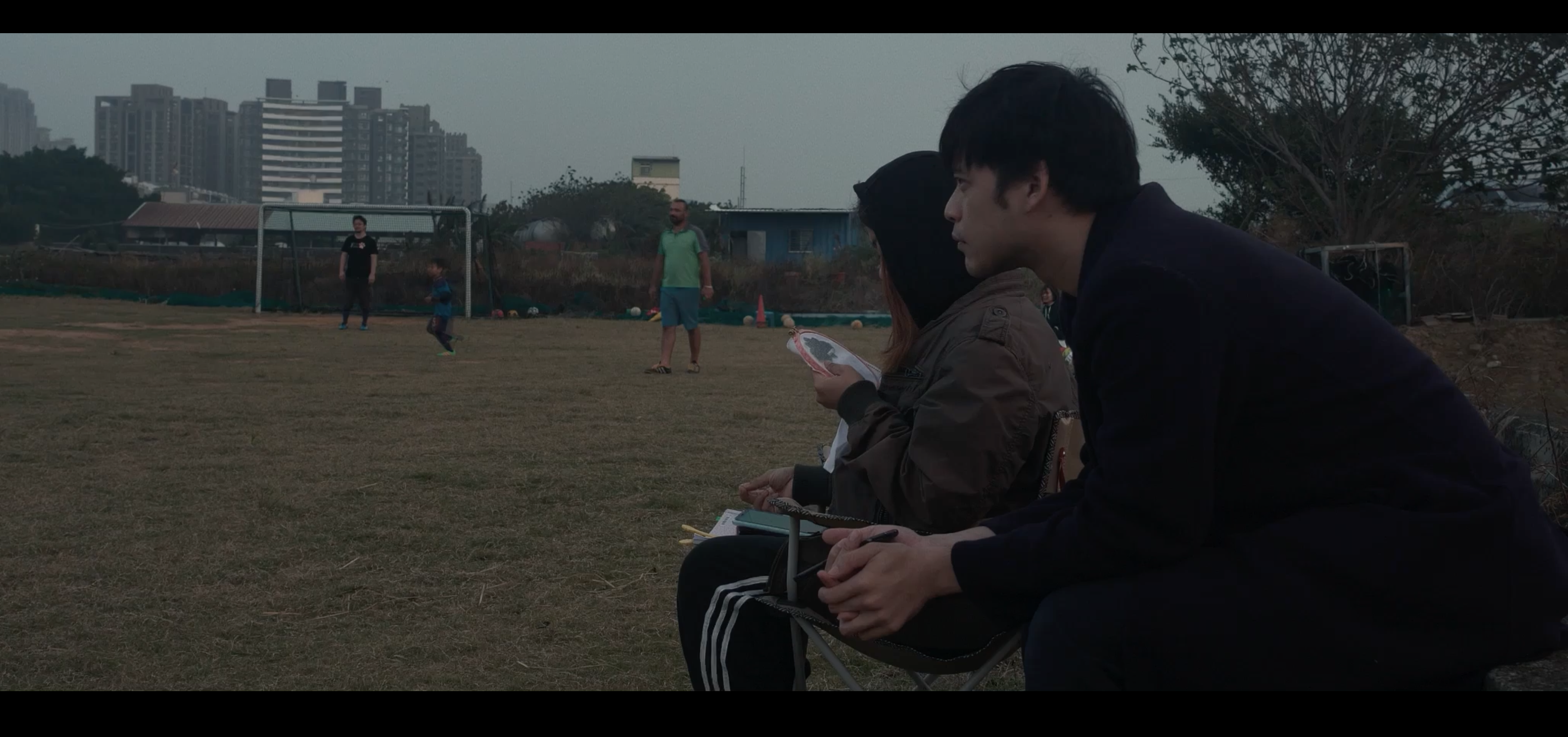
Film still from Etude (Courtesy of Director Lin Yu-en)
Long before Lin became a filmmaker, he had already watched a myriad of home-movie documentaries. “My favorite home-movie documentary is Hard Good Life by Hsu Hui-ju,” said Lin with a bit of excitement, “in which Hsu presents ordinariness but you can tell how she adopted a meta-cinematic avant-garde perspective when filming it to provide a different level of thinking for the documentary short.”
“For me, watching these home-movie documentaries really encourages you to take the camera and film your own. After watching Small Talk by Huang Hui-chen or Why Is Yellow the Middle of the Rainbow? by Kidlat TAHIMIK, you will be prompted to go back home and face your family via your camera, so all these home-movie documentaries I have watched are the motivation for me to make my own,” said Lin.
I could not hold it back but replied: “it seems too naked to confront one’s own family via one’s camera.” Having been through the journey, Lin did not see it as something fearful. He said with determination: “But home-movie documentary has the potential to be universal, because in these characters, we see a part of ourselves.”
It’s Time for Baseball Game When You Feel the Pain
Lin once mentioned: probably because of the many home-movie documentaries he had watched, he began to believe that making a home-movie documentary could facilitate the communication and mutual understanding between family members. He thus held the expectations high when he started to film Etude, with the hope of improving family relationships during the filming process. However, what he really experienced with his camera was an endless journey of ups and downs – when it went down, it was inevitably frustrating. In one of our interviews, he said with a bitter laugh: “Your observation article may turn out to be about how I am making an “impossible home-movie documentary. ”
When one’s creative work and family life are so closely related, pressure seems unavoidable. One must struggle between hope and disappointment. I wondered how Lin dealt with all these complicated feelings, and he opened his hand, pointing out the calluses: “Baseball is my shelter when I suffer.”
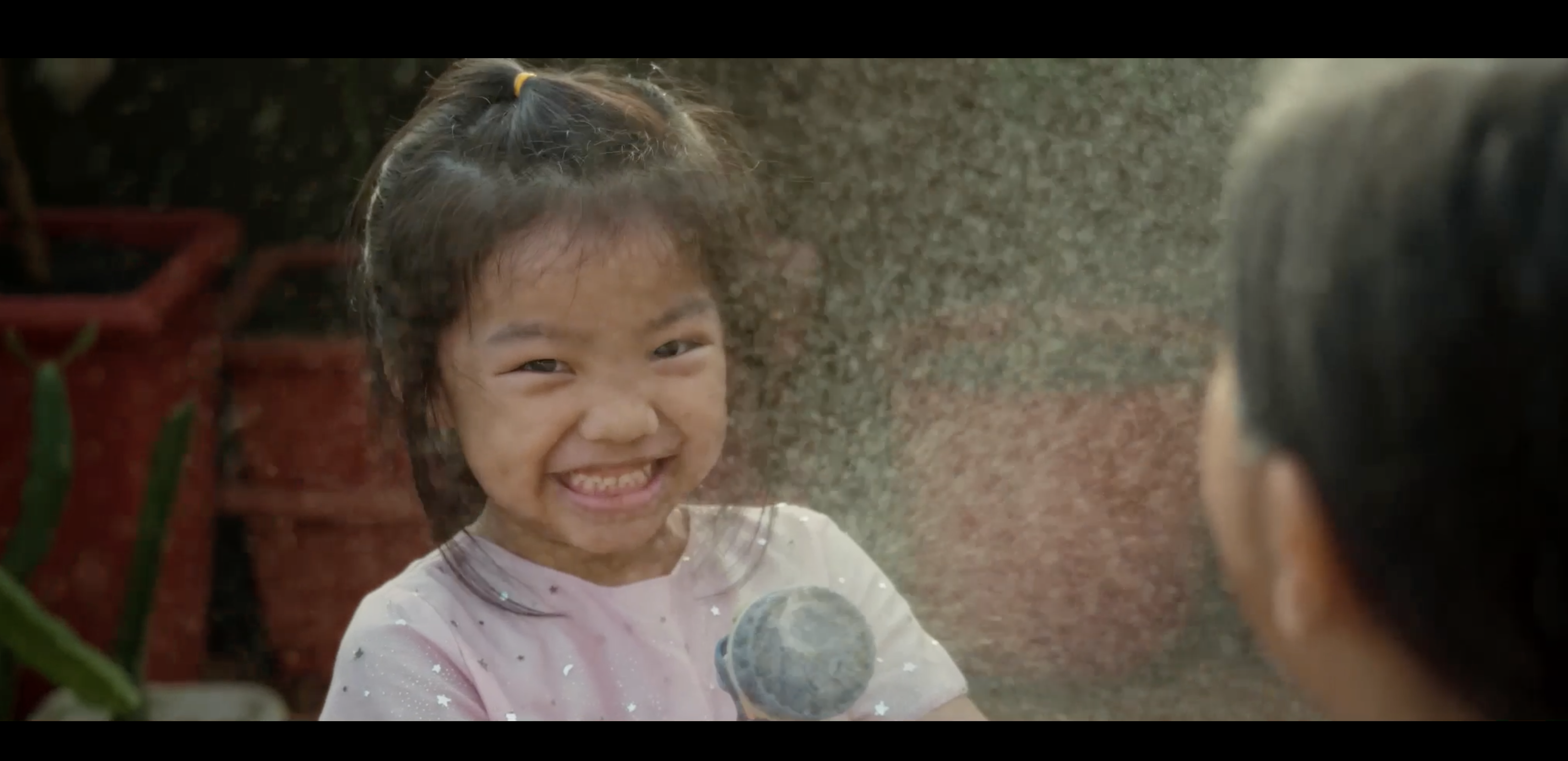
Film still from Etude (Courtesy of Director Lin Yu-en)
“My love for baseball comes from my maternal grandpa, who was an enthusiastic baseball fan and also played baseball at the farmers’ association, so baseball connected my grandpa and me. I always wanted to be a baseball player when I was a kid, and I would watch the live game on TV and imagine being one of the players on the field. Glass was broken by my swinging bat at home, twice, and I got a good beating from my mom.” His eyes lit up when he talked about baseball: “Since I was a child, baseball had provided a shelter for me to escape from what made me suffer. In recent years, it was my baseball/softball time that got me through all the painful moments when filming my home-movie documentary. Baseball is an interesting sport: you have to give your best at every action, because it takes a second to decide whether you win or lose it. For example, when you pitch on the field, the more you are afraid of losing control of the ball, the more likely you are to make an errant throw, so you have to be very concentrated every second, to give everything you have, and I am fascinated by such an absolute concentration to give one’s everything. To catch a ball, I can put my life at stake for it.”
“Unlike many baseball fans who see it as a recreation, I have a baseball dream – although it is already too late for me to become a baseball player, and I probably do not have the top-ranked talent it demands, I still want to keep the dream in my heart, out of a romantic nature, I guess,“ Lin laughed and said.
A Simple Person Documenting One’s Family Life
If there is so much pain, why does he not give up documentary filmmaking? Lin’s answer stayed true to his fascination with “the feeling of concentration”: “From the viewfinder, I could concentrate on my mother, on Tu-Dou, and on the filming process, which triggered a very strong feeling within.”
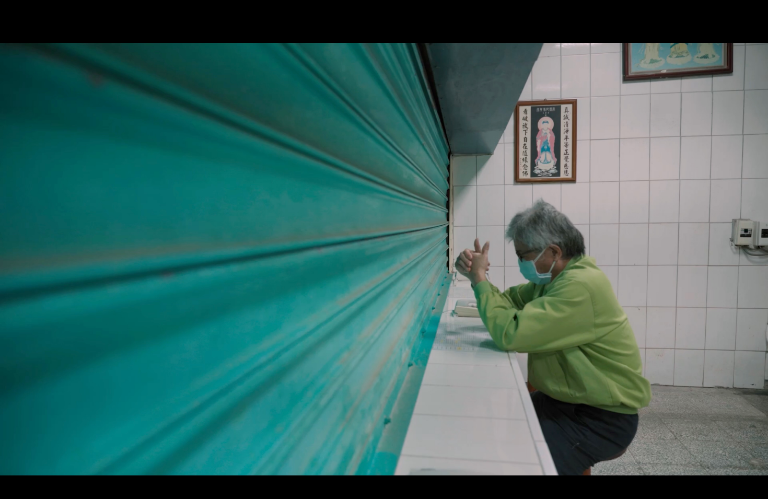
At this point, in the spring of 2024, Etude is in the final stage of editing. Although the struggles remained, both with the the film and with the family, Lin seemed to adopt a completely different attitude: “It is an obvious feeling that although I do not see my family very often, I can still use my camera and its gaze to express my love for my mother, such as when I looked at her praying or accompanied her for tomb-sweeping, which were not dramaturgically important, but in those moments I saw my mother’s expression and gesture – for me, they were the most valuable moments throughout the filmmaking process. The presence of the camera indeed helped me to have a different relationship with my mom.” Lin continued: “By filming them again and again, I also built closer relationships with my sister’s family – I hoped, not only for my sister to remember that I was her family and she could trust me, but also to play the role of a good uncle and to take part in her children’s life. I think these things are more important than what the final cut will be like.”
Looking back at what had troubled Lin at the early stage of filmmaking, he seemed to find a different perspective to give them different meanings. According to Lin, he began to feel that he was ready for the right closure of his filmmaking: “It started with a question – ‘why is my family different from others?’ or an attempt to unite the family by filming them, but now I notice that my attitude has changed, and I no longer need the presence of the camera to ask them questions, or to search for something via the act of filming. I hope in the future that I can go back to my familial role, with my natural and physical presence, as a son and younger brother to have different relationships with my family.”
However, his task of documenting memories of his Family-of-Origin with filmed images still has a long way to go: “I will continue filming my family, but not for filmmaking anymore; I want to document the daily life of my family, and this time there will be neither cinematic narrative nor artistic purpose.”
When Lin was growing up, the only video recordings of him were the annual footage of his musical performance at the semester exam in music-talent class, so he has always cherished moving images as crystallized memories: “For my nephew and niece, I am sure that when they become adults and look back at their childhood, these images will make precious memories.”
As Etude reaches the final stage of editing now, let us look forward to the day when we can finally see the documentary film created from the filmmaker’s most intimate life experiences, with which he gently and honestly explores the meaning of “home” and “love.”
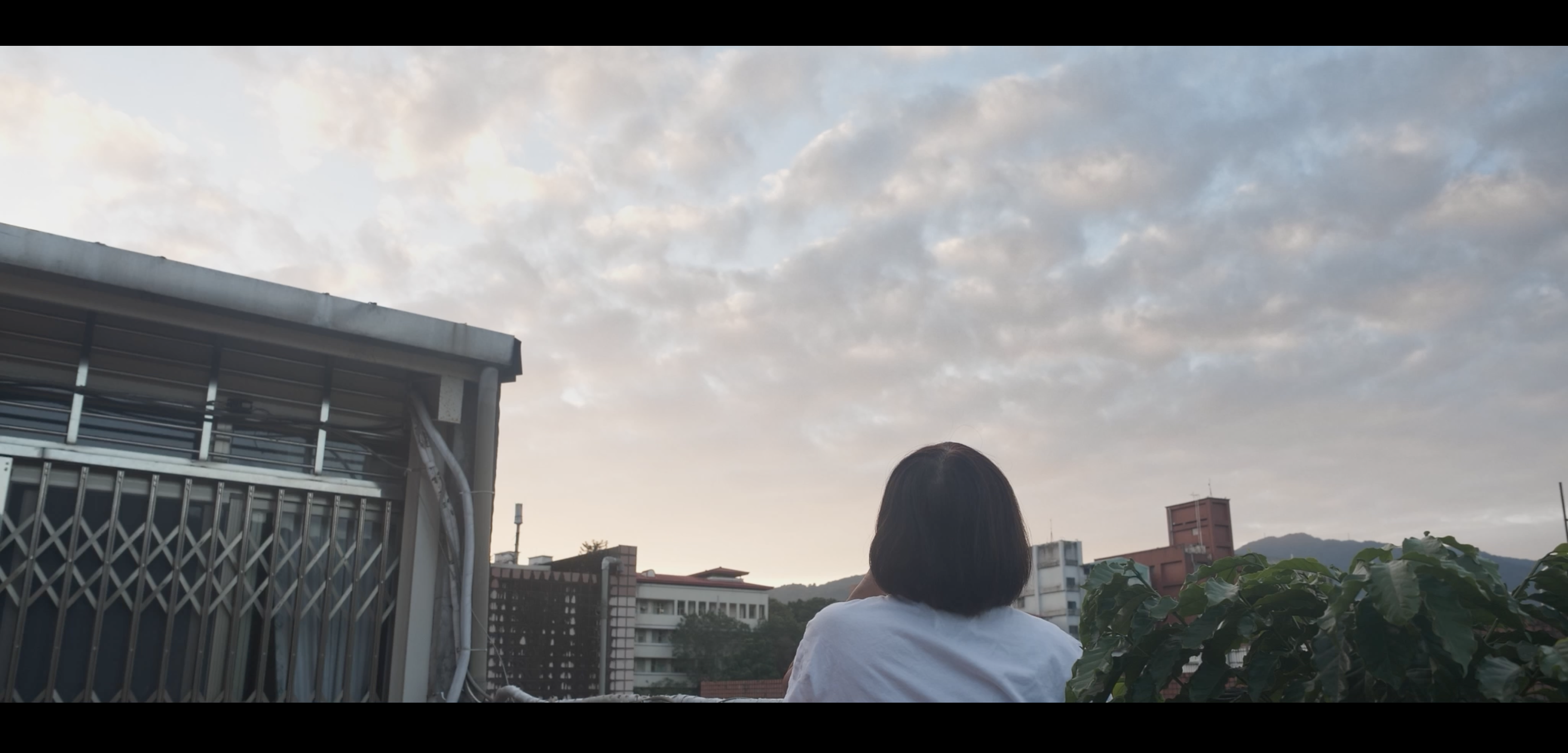
Film still from Etude (Courtesy of Director Lin Yu-en)
(This article was completed in February 2024.)
NOTE
[1] Translator’s note: when China opened up its economy, many Taiwanese companies hired Taiwanese supervisors when they moved to and extended branches in China.
*Translator: Siraya Pai
More CASE STUDY