CASE STUDY
A Decade of Returning: The Artistic Practice and Homecoming Journey of Artist Hewen (Yi-Jen Dou)
Ting-Yu Liang
2026.06.24


I have frequently traveled between Hakka villages and indigenous tribes along the mountains of Taoyuan and Hsinchu since 2017, and engaged in many conversations and exchanges with artist Hewen a Ta:in Tawtawazay (Yi-Jen Dou) on my exploration and artistic practices regarding my own family history of "headhunted ancestors" (wutou zugong, 無頭祖; referring to ancestors killed during conflicts involving Indigenous headhunting practices) and intercultural interactions between Han Chinese and indigenous peoples. However, it wasn't until July 2025 that I visited Sawi' (Baishou Tribe) in Shitan, Miaoli with her for the first time.1 She has been traveling to and from this place for many years. On the day we went together, I realized the deep connection that this artist had built with the settlement. She conversed and consulted with the elder 'Itih a Kalih Tawtawazay (Ding-Fa Dou) with great familiarity, listening attentively and quietly at times, then taking notes with her pen or recording with the camera.2 This represents a sign of respect and willingness to learn from the elders, as well as a way of shouldering some responsibility of passing the torch to future generations.
I have known Hewen for a long time; we were classmates from university to graduate school. Over the years, her creative projects and performances have often incorporated layered imagery, archives, and bodily engagement, yielding both nuanced interpretations and transmutations of ethnic history and cultural ceremonies. She has repeatedly questioned her own Saisiyat identity and her family's migration history. This time, she centered on the sinaton (great ceremonial banner, 大祭旗).3 It is an important ritual artifact of the Saisiyat people that can only emerge once every ten years, closely linked to their culture, ethnic identity, and worldview. It is said that only a few elders today have full mastery over the knowledge of making and using the sinaton. This means that, if not preserved and recorded in time, this cultural asset may face discontinuity or disappear altogether within a generation. Ten years suffice for an entire group of people to grow from youth to young adulthood. The once-in-a-decade appearance of the sinaton coincides perfectly with the rhythm of the artist's life.
This project spans many years and may not be "completed" in the short term, as it involves years-long cultural practice and accumulation, as well as the decennial paSta'ay ceremony occurring at the end of 2026. From my perspective, Hewen's creative practice has long transcended the temporal scale of individual production of artworks and exhibitions, evolving into a long-term and continuous indigenous artistic practice deeply engaged in community revitalization and cultural regeneration. This is precisely the focus of this article and one of the reasons that compelled me to start writing.
I. Family History: Guidance from Ancestral Spirits
Hewen's creative journey began with her exploration of the Saisiyat community and her family history. Her path did not set out from the idea of "art for art's sake", but rather from the yellowed photos stored deep within the cabinets of her family home. She searched for clues in limited historical records and inquired into her family history through the fragmented memories of her elders, trying to piece together the relationship between her own identity and her ethnic lineage. Her artistic practice can be traced as far back as 2015 with her work ta'ay, which exhibits both archival and documentary rigor as well as her unique aesthetic sensitivity.
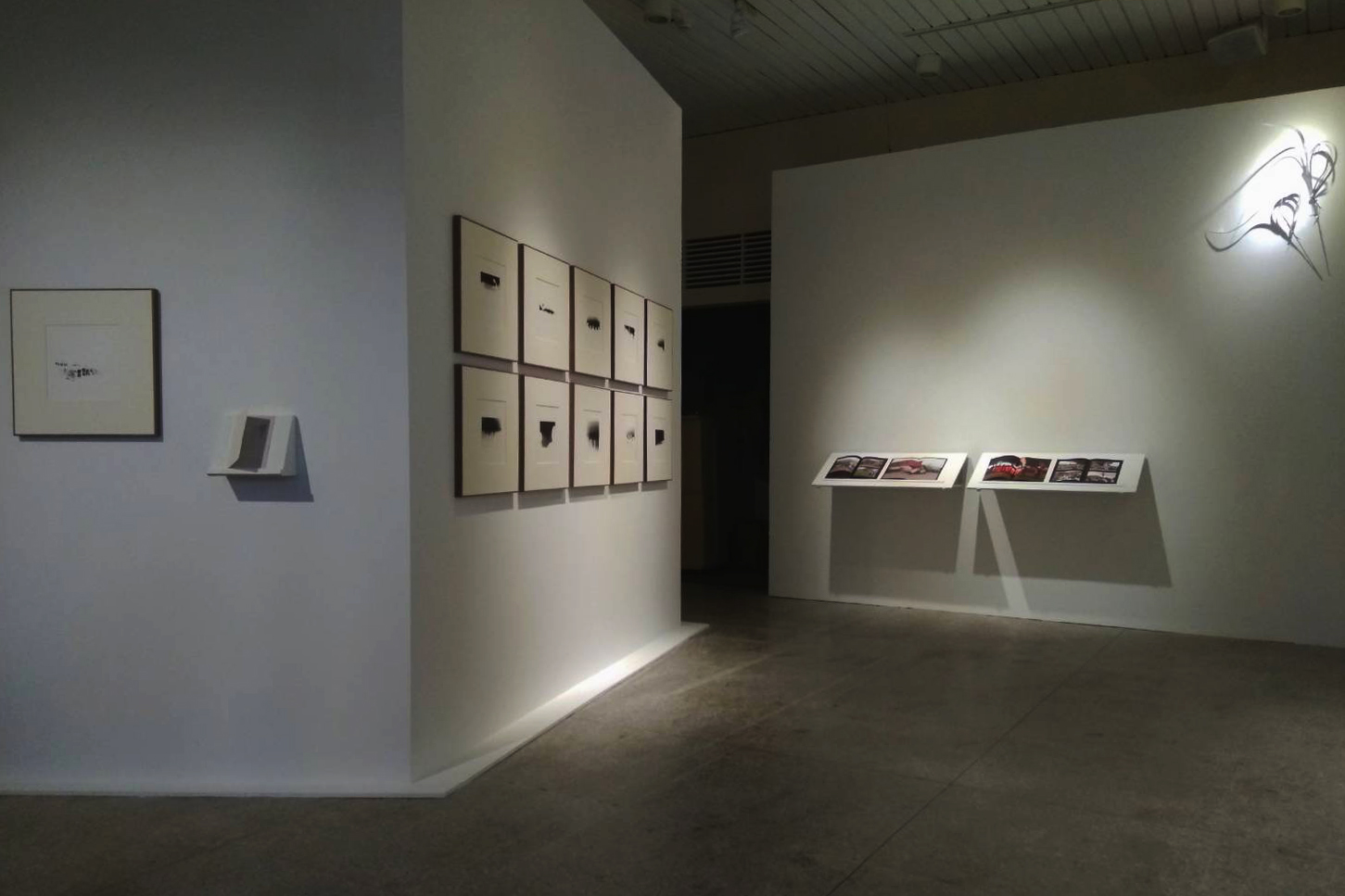
ta’ay, Hsinchu City Art Museum, 2018 (Courtesy of Hewen)
Based on the artist's on-site participation in and photography of the traditional Saisiyat ceremony paSta'ay, this series places the ritual's spiritual atmosphere, transcendent of time and space, within the materiality of photographs. During the paSta'ay ceremony, a weather phenomenon often occurs, evoking strong feelings among community members: dense fog. The Saisiyat people believe that when mist and clouds gather in the valleys, shrouding the world seen by human eyes, this indicates that the ta'ay (legendary short people) have descended. The images in ta'ay have been processed as negatives: the original black becomes white, the white inverts into black. After this reversal, the white fog becomes a blurry black shadow in the picture, like a supernatural spirit. Human figures, on the other hand, turn into a strange bright white, like someone being watched by the ta'ay spirit in the fog. This visual reversal echoes the ritual experience: The ta'ay itself is invisible, but after this transformation, it gains a sense of atmospheric presence. The ceremony marks a space-time of co-presence between community members and the ta'ay.
However, in the early stages of her field research, due to fading family memories and a scarcity of documentary records, she tirelessly collected the few remaining files in her clan and went about organizing, archiving, and digitizing them. Through the construction of genealogies, the collection of oral histories, and conversations with tribal elders, she sought to find her place within history and ethnic networks, creating works such as Family Faces (家族臉譜), Family Chronicle (家族史書), and Ms. Dougen Meiyu (豆根美玉女士) (2016). She also continued to observe the community from her personal perspective of a returning local, compiling photographs from several tribal fieldwork projects into the book series Tribal Collection (部落集錦) (2016-2018). Between 2019 and 2020, through introductions by other community members, she visited the last remaining Saisiyat shaman and attempted to commune with the ancestral spirits through the traditional bamboo divination ritual. She then communicated with her ancestors through casting moon blocks.4 After more than two years, she finally recovered her full indigenous name.5 On the other hand, Hewen's artistic practice also reflects a sense of steadiness, never rushing to conclusions but always coming closer to the core of her people's history and culture.
Initially, due to the language barrier, a lot of key narratives had to be repeatedly verified and translated. To prevent her quest from becoming a blind walk through the fog of language, she began studying the Saisiyat language. As time went on, this search for personal and ethnic identity gradually evolved beyond simply figuring out her family genealogy. This investigation into her ancestors' migration roots took her through abandoned paths—trodden by her ancestors over a hundred years ago—deep into the mountain forest.
2. lohizaw: Field Visit - Action - Presentation
Since 2019, she has been working on the Lohizaw: Returning to the Migration Route of the Saysiyat project (hereinafter referred to as "Lohizaw"). Under the personal instruction of Sawi' Tribe elder Itih a Kalih Tawtawazay, Hewen found possible clues about the migration route of her own family, the Tawtawazay (Dou) clan. What set these actions in motion, however, was not only interpersonal support: the guidance of kayaba' (her deceased father) and tatini' (ancestral spirits) helped pave the way. The artist once stated, "In this process, the actors are no longer limited to tangible 'people', but also include the 'non-human' presences that continue to exist in another form. Intertwined, the two weave a network of energy flow that creates a powerful momentum. This stirs up the tribe's culture, history, and sense of self".6 Returning to her hometown for field research, she entered the mountains of Nanzhuang and Shitan in Miaoli, attempting to "retrace" her ancestors' migration route from 150 years ago. Venturing into the highlands in search of her family's ancestral village and hunting grounds has since become a core part of her creative process.
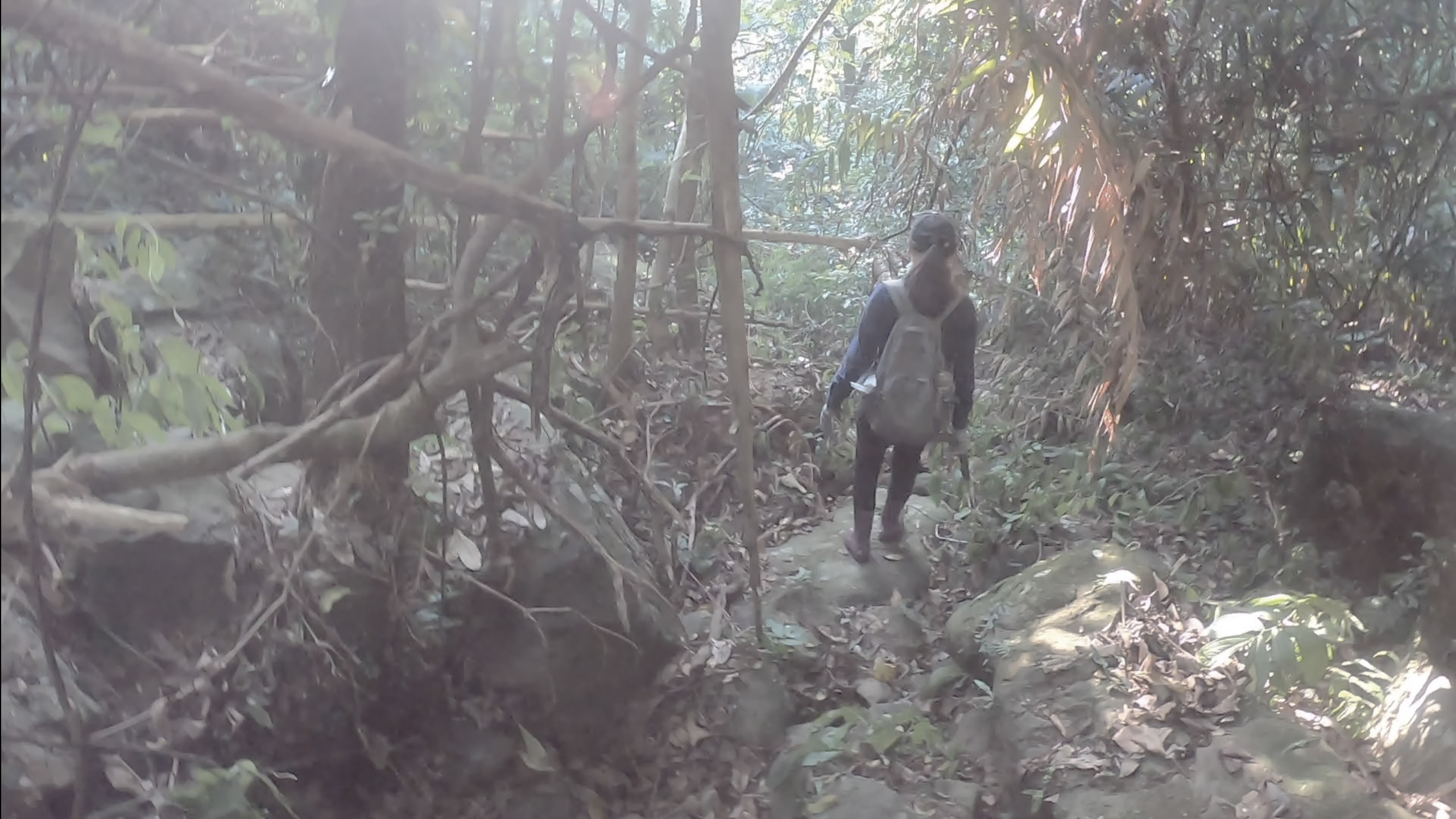
lohizaw, entering the mountains, 2020 (Courtesy of Hewen)
On the other hand, during her long journeys between the city, her kin, and the mountain forests in search of her ancestral migration route, she also planned several participatory art events. The most prominent example is the Walking Together: Sketching in the Mountains project (2020), which centers on the concept of being "on-site". For the event, almost 30 participants from diverse backgrounds, including students, artists, and tribal elders, were invited to hike together up the mountain and back along the old trails of Penglai, Nanzhuang. The artist views sketching as a way to bring people back to the mountains and forests. Participants use their preferred creative form—watercolor, sketching, writing, or body performance—to capture the scents and feelings of the moment on an ancient trail or in a mountainous landscape. This kind of physical experience transforms the relationship between humans and mountains from "viewing" or "extraction" to a form of embodied perception and interaction with the environment, where humans coexist with non-humans.
The first presentation of Lohizaw was held in 2020 at the Iasang Art Studio in Zhunan, Miaoli. She deliberately chose Zhunan as the first stop of her multi-phase project because it sits near the sea at a geographical juncture in the early migration route of her clan. For the second stop, she returned to tribal grounds to organize Pa'inrowa’—Inversion: Return of Saisiyat Youth (pa’inrowa’翻轉——賽夏青年的迴返) (2021). This exhibition at the Museum of Saisiyat Folklore in Nanzhuang, Miaoli not only presented further developments of the Lohizaw project, but from a curatorial perspective, also attempted to bring together other Saisiyat youths, directly addressing the generational gap in the transmission of Saisiyat culture. On the one hand, the Saisiyat phrase pa'inrowa' ka hin'azem means "to turn over one's thinking". More than an ideal, this reflects a shift in attitude among the younger generation: the understanding that cultural learning must manifest through concrete actions. On the other hand, the exhibition invited young Saisiyat artists from different communities, as well as those studying and working abroad, to express their way to reconnect with their tribe and rediscover the positioning of art in Saisiyat culture through diverse media such as painting, photography, body expression, and sound7.
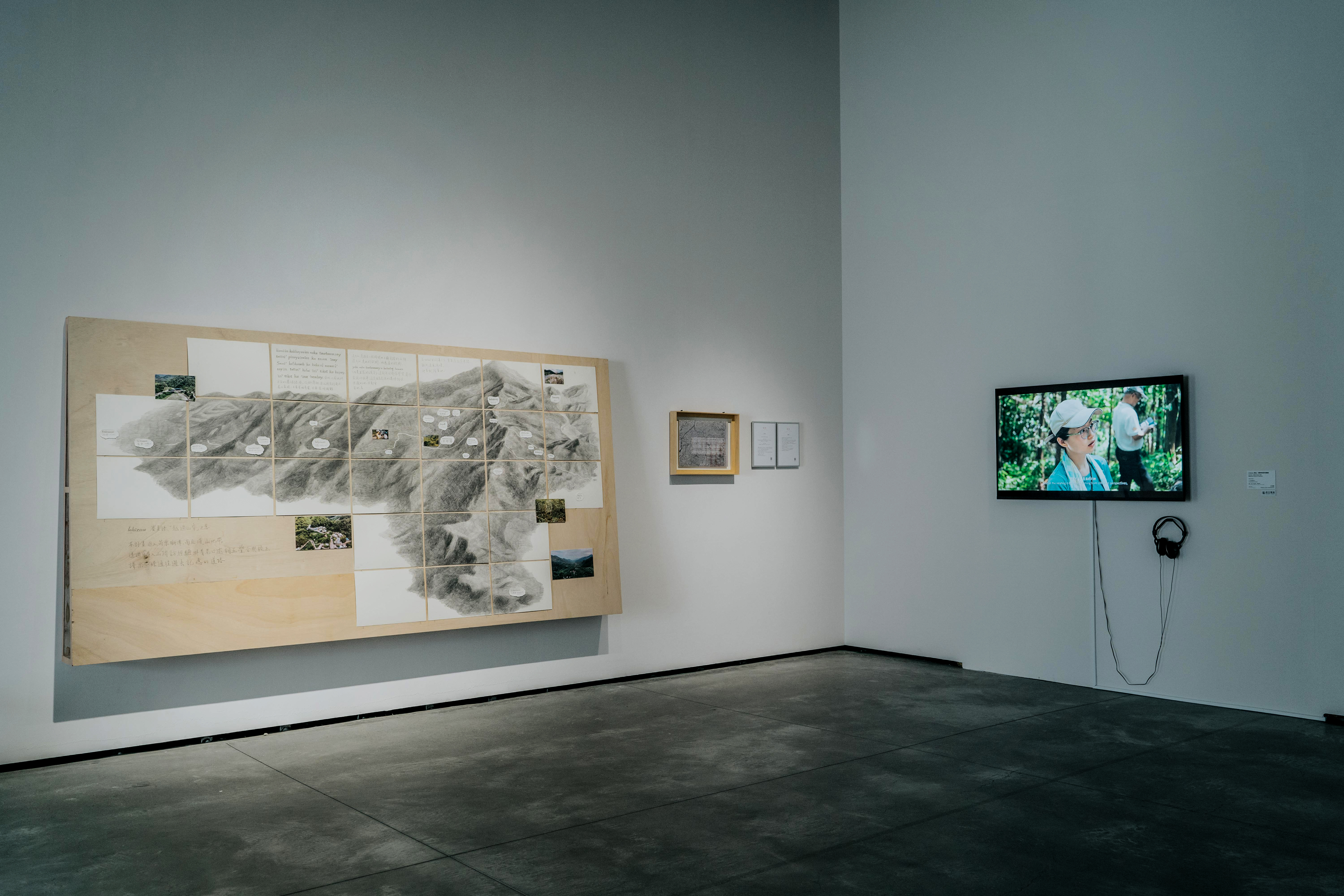
Lohizaw — map drawings, documents, and video, Tainan Art Museum, 2023 (Courtesy of Hewen)
For me, this exhibition not only represents a significant event in the recent development of indigenous art in Taiwan, but also a substantive disruption within the Saisiyat people and its tribal communities. It marked the first time that the local folk museum had a community-based exhibition oriented towards contemporary art, as well as the first instance of Saisiyat youths collaboratively curating an exhibition in their hometown. Thus, Lohizaw—"crossing the mountains"—becomes a process of "return" with multiple meanings: at once the physical action of traversing the geographical distance between city and mountain, a form of cultural dialogue across different generations, and an interactive movement between contemporary indigenous art movements and the local folklore museum. Starting with the desire to "find the way" by investigating the migration routes of her clan, this path paved by Hewen's time, effort, and emotions has expanded into a broader movement of cultural heritage and artistic action.
3. Both Art and the Revitalization of History and Culture
In Hewen's artistic practice, many projects embody both artistic creation and the revitalization of history and culture. These two aspects mutually reinforce and complement one another. For her, art and the revitalization of history and culture have never been one or the other, but rather two sides of the same coin. Art provides the power of imagery, narrative, and sensory experience. Cultural preservation imbues creative works with depth and meaning. Therefore, rather than a formal exploration detached from cultural and historical revitalization, the artwork represents an artistic practice conceived, developed, and continually feeding back into its cultural roots.
Between 2021 and 2022, she launched the Revitalization and Research Project on the Traditional Saisiyat Rememe: (Dyeing) Techniques in Nanzhuang, Miaoli. Dyeing is an indispensable part of Saisiyat tomnon (weaving). Closely connected with the land, nature, and everyday life, the practice encompasses a vast well of knowledge and aesthetic experience. The craft had nearly vanished over the last century as modern materials and lifestyle shifts displaced traditional practices, leading to a gradual loss of knowledge in sourcing and processing natural dyes. However, Hewen collaborated with Li-Mei Pan, Kamatomnon Lalaw A Bo:ong Baba:i' (Li-Ju Feng), and other fellow Saisiyat individuals in an attempt to restore traditional dye formulas by collecting literature, interviewing elders, and experimenting. They sought to not only "revive" this craft, but also explore its potential for further development and innovation.
Since 2023, she has dedicated herself to the revival of traditional ceremonies and culture through the Talolong River Cleansing Ceremony revitalization project. This ceremony gradually fell out of practice after the 1960s and even vanished from most Saisiyat people's memories until its revival in 2019 by the elder 'Itih a Kalih Tawtawazay, who held the ritual at Shitan Creek next to the Sawi' Tribe. Talolong (river cleansing ceremony) centers on maintaining the community's living environment. The recovery of these traditional rites also leads attendants on-site to reconnect with the land. In other words, this revitalization also means rebuilding history. Hewen conducted documentary research, interviewed elders, and recorded this ceremony, forgotten for nearly 40 years, through multimedia recording.
In the same year, she created the work kaSpalawan: Looking Back, a Place of Gathering (kaSpalawan回望,相約之地) for the Romantic Route 3 Arts Festival. Focusing on the traditional building kaSakira:a'an (watchtower) and the migration route of the Saisiyat people, she attempted once again to piece together the history of her clan and even the entire Saisiyat people. In traditional villages, watchtowers serve as important defensive structures. The artist chose to build one facing the lower plains of the Shitan River at the entrance to the Sawi' Tribe. The resulting platform allows one to "look back" at the Saisiyat people's migration history, thereby reflecting upon oneself and returning to the land and migration routes of the ancestors. In my opinion, she took field research as the basis to transform the revitalization of history and culture into a multifaceted art project, and in turn, the art project served to promote cultural continuity. Such an interwoven model makes her work no longer simple research or pure artistic creation. Instead, it places art, history, ethnicity, and land on the same plane, in mutual resonance and nourishment. This approach encompasses more than just ethnic history; it engages with those living in the present while reaching toward future generations.
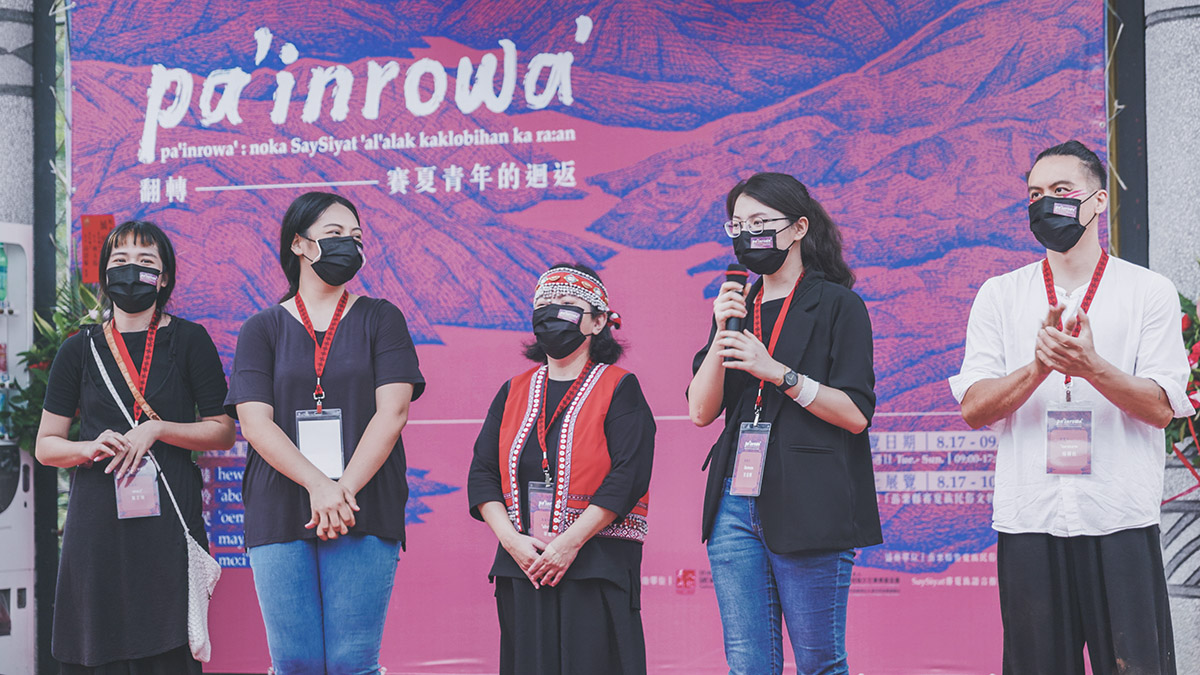
Pa'inrowa’—Inversion: Return of Saisiyat Youth, Saisiyat Folklore Museum , Xiangtian Lake, Miaoli County, 2021 (Courtesy of Hewen)
4. Kaspengan: Negotiation and Re-creation
I remember during an episode of the Alian 96.3 radio show Takita' Art Power hosted by Hewen, she spoke about interactions with elders feeling like a "race against time". I resonate strongly with this observation. Without sufficient action to document and engage in dialogue, these elders' life stories and local knowledge may quietly vanish within the next decade. This deeply felt awareness has given her the urgency to actively conduct oral history interviews with Saisiyat elders and to organize cultural forums in recent years.
Between 2022 and 2024, Hewen led a team of over ten Saisiyat youths to organize several Miaoli Saisiyat Traditional Culture Forums within their communities. They continued to visit Saisiyat elders, documenting their oral accounts through video and compiling a bilingual Saisiyat-Mandarin glossary. These interviews do more than preserve the personal narratives of the elders; they help map the contours and possible challenges of Saisiyat culture. The cultural forums highlight the shifts in the zeitgeist and ethnic culture. Hewen regards these forums as a kind of "dialogic platform" that enables Saisiyat people of different generations to share their experiences and perspectives in the same space—a curatorial practice that promotes understanding and cultural transmission.
In my opinion, this bears a close relation to her understanding of kaspengan in Saisiyat culture. In the Saisiyat language, kaspengan is often translated as "culture", but its meaning goes beyond that. The word actually comprises norms, ethics, rituals, and all aspects of life, serving as a complete guide on "how Saisiyat people should live and interact with the world".8 In other words, it acts as both a set of rules and a philosophy of survival—not only pointing to the past of their people but also guiding its future. This requires Hewen to find a balance between cultural preservation and transformation while seeking potential for re-creation when planning such activities.
This is far from a smooth road, however. As a Saisiyat woman, Hewen often has to engage in more negotiations when dealing with traditionally male-centric Saisiyat society and organizations due to her gender. Whether it's filming documentaries or joining cultural rites and celebrations, Saisiyat women must follow specific precepts. Hewen must sometimes tread carefully to navigate the boundaries of cultural taboos. Traditional beliefs dictate that women should not be directly present on certain occasions and cannot touch certain objects. Even when filming rituals, elders must assess their "propriety" and she needs to obtain the community's consent according to the social and familial ethics of the tribe. Throughout this process, Hewen must seek to negotiate with the established "traditional cognitive framework" regarding gender and the transmission of ritual practices. Especially when working on the fringes of cultural taboos, she has to constantly ask herself: How can she achieve the goal of documenting and preserving information without violating conventions? As a Saisiyat woman deeply involved in cultural and historical revitalization, she must navigate these taboos and restrictions with intentionality, placing a greater emphasis on dialogue and response.
Unlike researchers from outside the community, as a member of the tribe, Hewen has an important reason for returning there. This precisely makes the problems and predicaments confronted by the community weigh more heavily on her. Rather than an isolated difficulty arising from her return to the tribe, this tension reflects her awareness of the structural challenges the Saisiyat people face in the present and the years ahead. The transmission of traditional skills and knowledge is fraying, with the rate of language loss now outpacing that of learning. While the community's elder population continues to decline, the resources and incentives needed to draw younger generations back to their roots remain underdeveloped. Outside researchers cannot grasp these issues in a short time frame; however, these realities pain her personally in her creative practice and every dialogue with the community elders.
As a member of the Saisiyat people, she confronts what can be described as a cultural crisis—missing family history, nearly forgotten migration routes, and even traditional rites and skills on the verge of disappearance. Once interrupted for decades, it might become impossible to restore these traditions. If at its core, kaspengan aims to maintain cultural continuity and creativity in a constantly changing world, then such spirit has guided Hewen's series of artistic actions upon returning to the tribe, seeking possible intersections between tradition and the contemporary era. For the artist, kaspengan not only represents a set of norms that must be memorized and followed, but also a path that needs to be constantly re-created and walked upon.
5. Art: A Path to "Decolonization"
Hewen's artistic practice also grapples with a deeper issue: the profound imprints left on the Saisiyat people by successive colonial regimes throughout history. During the Qing Dynasty, encroachment and aggressive land reclamation by Han settlers displaced Saisiyat communities, forcing them to migrate toward the Shitan area in Miaoli. By the end of the 19th century, armed conflict with these settlers compelled an even deeper retreat into the mountains. In the subsequent era of Japanese occupation, the military suppression and governance following the Nanzhuang Incident uprising perpetually reshaped the political and ceremonial order of Saisiyat society. The White Terror period after World War II also inflicted enduring trauma on language, thought, and social networks. This historical wound has permeated the everyday perceptions, knowledge systems, and self-identity of many community members. On the other hand, unlike many indigenous artists who came before her, she has received formal training in art school, particularly in terms of critical discourse and creative conceptual thinking. Her creative orientation also maintains a certain dialogue with the "ethnographic turn" in recent Taiwanese contemporary art.
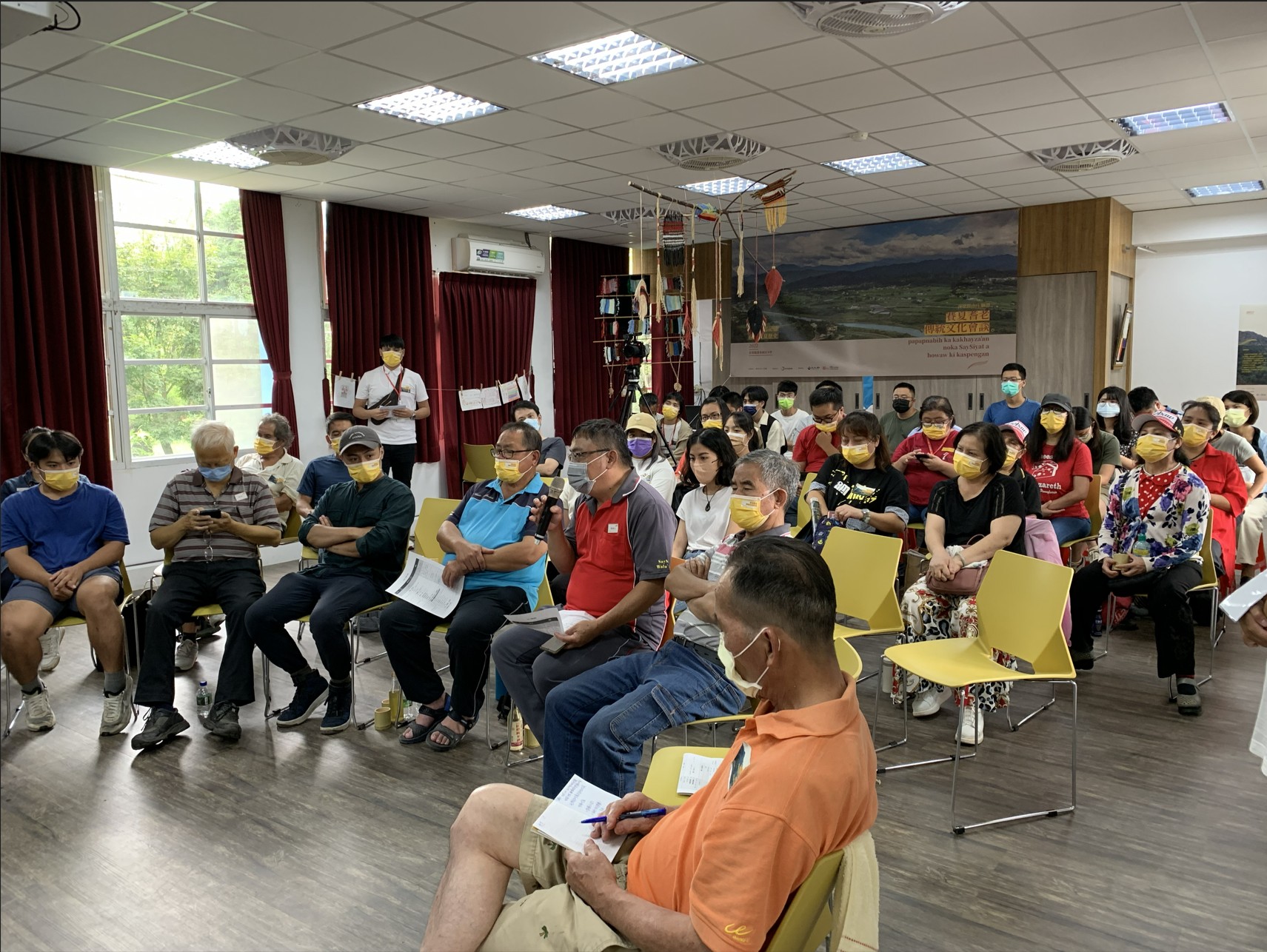
"Discussion on Saisiyat Elders' Traditional Culture," Peng Lai Elementary School, Nanzhuang, Miaoli, 2022 (Courtesy of Hewen)
In my opinion, her artistic practice stands close to "decolonization" due to her clear understanding that the survival of "indigenous subjectivity" requires more than resisting external historical structures and social systems; she must tackle the complex contemporary challenges and crises within her own community. In Taiwan's contemporary art scene, emerging topics and novel media always have a strong allure, often leading artists to pursue form. However, Hewen's practice still demonstrates her distinct resilience as an artist, reflected in her negotiations with the traditional framework within her community—sometimes requiring direct communication, at others taking more indirect approaches, as she engages in multiple forms of mediation with a long-standing and implicit network of power. On the other hand, she also demonstrates some "willfulness" in her artistic practice, remaining insistent on certain creative methods and paths: She has chosen a more challenging road, positioning the tribe as her primary site and grounding her work in indigenous language and local knowledge. Her practice originates from the voices of elders and the tangible labor of cultural and historical revitalization, rather than being dictated by the institutional frameworks of the museum.
Here, "returning to the tribal community" is neither a fleeting passionate gesture nor an artwork-oriented creative approach, but a profound cultural pursuit sustained for over a decade. This project, A Once-in-a-Decade Event: Oral History and Visual Documentation of the Saisiyat Sinaton Ceremony, marks a key milestone on her creative path. As previously mentioned, the sinaton is an important ritual artifact only used during the Saisiyat decennial grand ceremony, made and carried by members of the Tawtawazay (Dou clan) and Tataysi' (Szu clan) in turns. As the ceremony occurs once every ten years, it takes twenty years for a clan to take the reins again. Such a long timeline presents severe challenges to cultural preservation: changes in lifestyles, the aging population, and the fraying of cultural transmission all threaten the continuity of this cultural practice.
Hewen's interview and filming project, set to take three years, will focus on the senior 'Itih a Kalih Tawtawazay, now the only remaining elder who has mastered the art of making the sinaton. This will additionally cover other tribal elders and historical documents. The project aims to document and transform the banner-making process and subsequent rites in detail through film. In this process, "decolonization" represents a long-term, immersive practice that transforms various historical factors: The intervention of artistic actions reclaims the things previously dismantled and lost during colonization. Hewen once remarked, "How many times in a lifetime can one participate in a major decennial ceremony?" Beyond a sense of awe at time, this realization speaks to the shifting of generations. As another decade passes and the elders leave us, who will be able to tell the story of the sinaton then? She understands that it is impossible to accomplish everything by relying on just one or two elders or a single project.
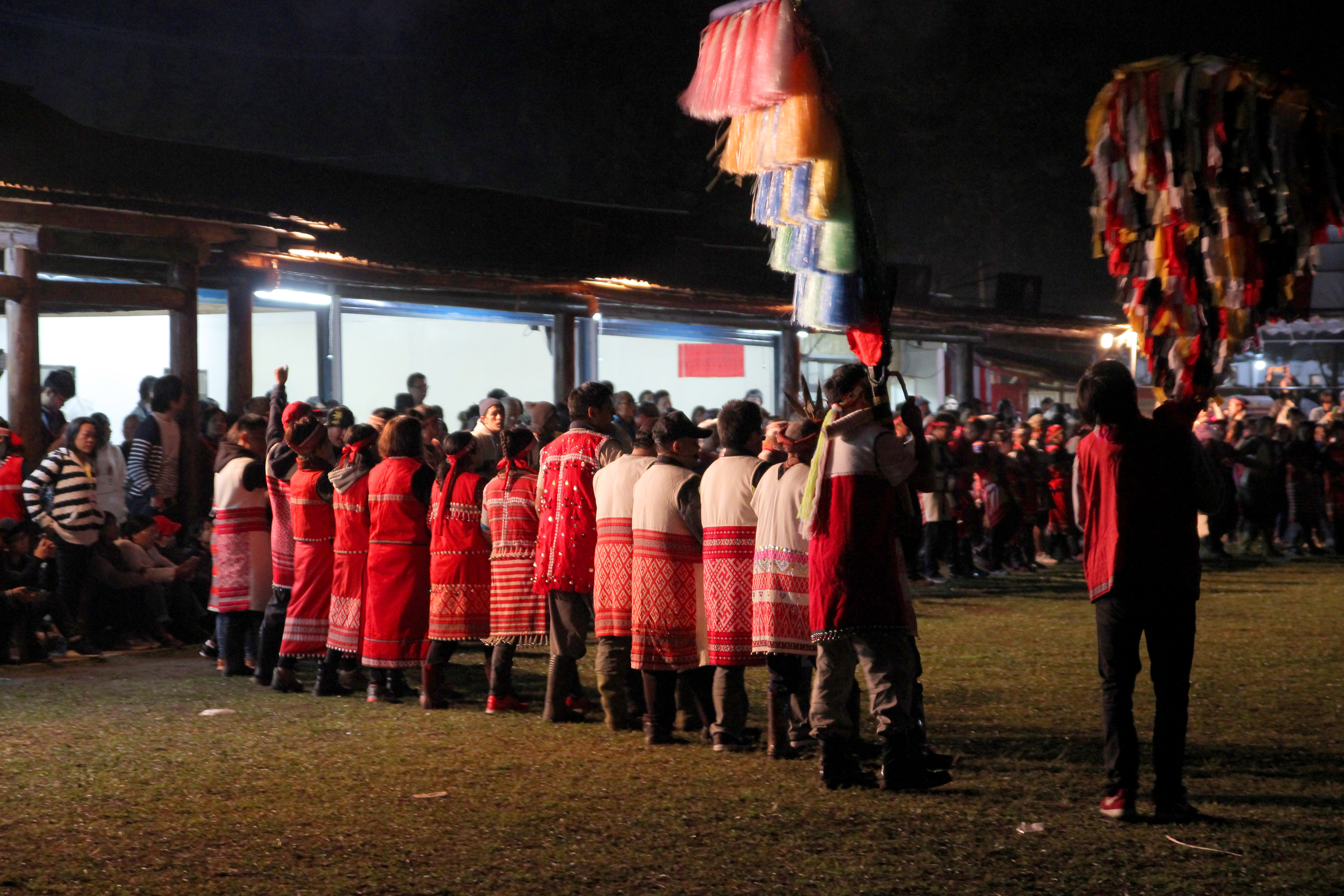
paSta'ay (Saisiyat Decennial Ritual), 2016 (Courtesy of Hewen)
In Saisiyat, the word pinayziza'an means "the road traveled", while kapayziza'an means "the road not yet traveled". For the artist, creative practice is inseparable from the journey itself. Whether retracing ancestral migration routes, navigating the long road of cultural revitalization, or executing repeated artistic actions, her work demands an embodied presence—conceptions of the future await physical realization. She believes that the next step must be "empowering the youth", enabling younger community members to not just be spectators, but to return to the tribe, participate in cultural construction and transmission, and become active heirs and promoters in the future. Long and unfinished, this arduous road necessitates a collective effort from the community to traverse successfully.
As I write, looking back on this journey of fieldwork, creation, and the revitalization of culture and history, I realize that this article is also based on a ten-year timeframe. When we first met, Hewen was returning to the tribe as someone entering unfamiliar territory, a student attempting to rediscover the Saisiyat people and the stories of their elders. Today, she employs her own language, body, and creative work to steward and translate the history of her people, moving beyond preservation of tribal history and memory to actively lead cultural and historical revitalization. Ten years suffice for the sinaton to fly again, enough for an artist to go from a pathfinder seeking their roots to an activist and cultural practitioner striving alongside the elders. On this timescale, cultural continuity and artistic creation do not exist as separate tracks. Rather, they are two threads woven together, constantly coming together to shape a cohesive path of life.
NOTE
[1]In this article, key terms and specific names are presented in the indigenous language wherever possible (with Mandarin romanization provided in parentheses upon first appearance). No further annotation will be provided after the first appearance.
[2]Hewen is from the Kaehkaeh'oe'an (Baguali Tribe) in Nanzhuang, Miaoli. As the elders within her family have gradually passed away, she sought guidance from the elder 'Itih a Kalih Tawtawazay of the Sawi' Tribe.
[3]Hewen's project is titled "A Once-in-a-Decade Event: Oral History and Visual Documentation of the Saisiyat Sinaton Ceremony".
[4]Because she has both Saisiyat and Hakka ancestry (her mother is a Hakka from Miaoli), she believes that the roles of and interactions between indigenous and Hakka communities deserve attention going forward, so that both her ancestral cultures can be consciously integrated into her daily experiences.
[5]Yi-Jen Dou's Saisiyat name is Hewen A Ta:in Tawtawazay. Tawtawazay is the family surname, while the given name Hewen A Ta:in originates from the Saisiyat's patronymic naming system, inherited from her grandmother's and father's names.
[6]See Dou, Yi-Jen, "The Return Route: Presence-Survival-Identity" (2021), p. 100.
[7]Includes artists 'Abowan 'Itih MinrakeS (Li-ling Chang), Taboeh A 'Oebay Tataysi' (Shihmin Szu), Maya' A Taboeh Hayawan (Yuan Lo) and Mo:i' A Taboeh Hayawan (Chih-ling Lo).
[8]Interview conducted by the author on August 13 and July 29, 2025.
[2]Hewen is from the Kaehkaeh'oe'an (Baguali Tribe) in Nanzhuang, Miaoli. As the elders within her family have gradually passed away, she sought guidance from the elder 'Itih a Kalih Tawtawazay of the Sawi' Tribe.
[3]Hewen's project is titled "A Once-in-a-Decade Event: Oral History and Visual Documentation of the Saisiyat Sinaton Ceremony".
[4]Because she has both Saisiyat and Hakka ancestry (her mother is a Hakka from Miaoli), she believes that the roles of and interactions between indigenous and Hakka communities deserve attention going forward, so that both her ancestral cultures can be consciously integrated into her daily experiences.
[5]Yi-Jen Dou's Saisiyat name is Hewen A Ta:in Tawtawazay. Tawtawazay is the family surname, while the given name Hewen A Ta:in originates from the Saisiyat's patronymic naming system, inherited from her grandmother's and father's names.
[6]See Dou, Yi-Jen, "The Return Route: Presence-Survival-Identity" (2021), p. 100.
[7]Includes artists 'Abowan 'Itih MinrakeS (Li-ling Chang), Taboeh A 'Oebay Tataysi' (Shihmin Szu), Maya' A Taboeh Hayawan (Yuan Lo) and Mo:i' A Taboeh Hayawan (Chih-ling Lo).
[8]Interview conducted by the author on August 13 and July 29, 2025.
*Translator: Linguitronics
More CASE STUDY